Chinese & Japanese Language Tests6 min read
HSK Paper vs Computer: Which Test Format Gives You the Highest Score?
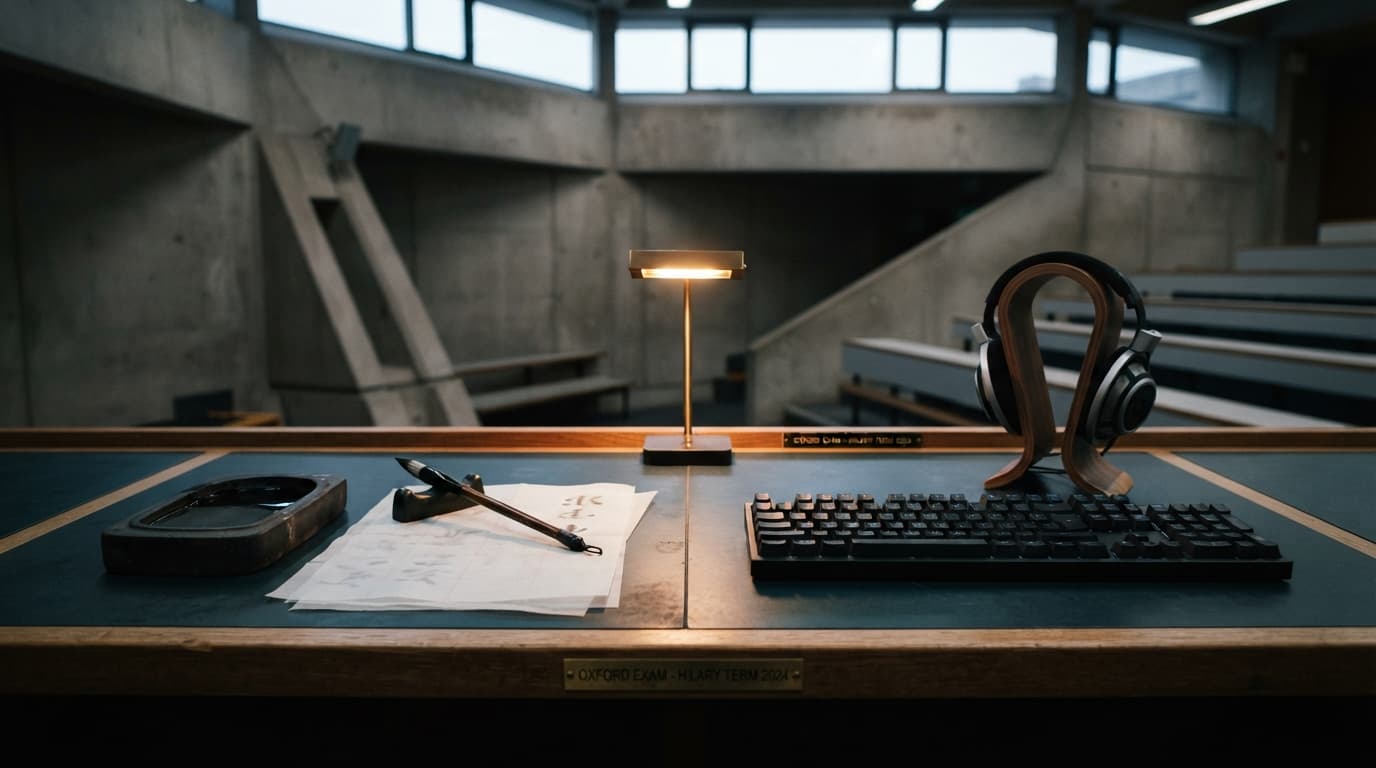
HSK Paper vs Computer: The Strategic Choice for Chinese Learners
When registering for the Hanyu Shuiping Kaoshi (HSK), your choice between the paper-based exam and the computer-based (also known as the internet-based test or IBT) can dramatically impact your final mark. The core syllabus, question types, and scoring criteria are identical across both formats. However, the user experience differs fundamentally in three critical areas: character production (typing Pinyin vs handwriting Hanzi strokes), listening environment (individual headphones vs shared room acoustics), and results turnaround (roughly two weeks vs one month).
For the vast majority of non-native learners—especially those sitting HSK Level 3 through Level 6—the computer-based test is the superior strategic choice because Pinyin input eliminates the risk of stroke order errors and forgotten Hanzi components. Nevertheless, certain reading habits and regional test centre setups make the paper version attractive to specific candidates. Below is a comprehensive breakdown to help you evaluate which format aligns best with your strengths before you book your seat.
Writing Section: Pinyin Input vs Physical Hanzi Recall
The writing portion is where the choice between paper and computer creates the widest score disparity. In the paper-based HSK, you must write Chinese characters by hand from memory. If you forget a radical, misplace a stroke, or write an illegible character, human examiners will deduct points. For advanced levels (HSK 5 and HSK 6), where you must produce comprehensive summaries and narrative essays within tight time limits, physical handwriting fatigue and stroke recall friction pose severe risks.
Conversely, the computer-based test uses standard Chinese input method editors (IMEs), such as Microsoft Pinyin or Sogou Pinyin. You type the phonetic Pinyin on a QWERTY keyboard, and a candidate bar appears showing the corresponding characters. This shifts your cognitive task from active character recall and stroke execution to passive visual recognition. Provided you know the correct Pinyin spelling and tone association, selecting the right character is straightforward. You can also rephrase, cut, and paste sentences seamlessly without leaving messy erasure marks on an answer sheet.
Common Pitfalls of Typing on the Computer HSK
While computer input offers a distinct advantage, it introduces unique traps you must prepare for:
1. Homophone selection errors: Typing quickly can lead to selecting the wrong character from the candidate list (such as mistaking 其 for 齐 or 必须 for 必需). The software does not autocorrect grammatical errors.
2. Keyboard unfamiliarity: Most overseas test centres, including UK Confucius Institutes, provide standard physical UK/US desktop keyboards. If you are exclusively accustomed to touchscreen phone typing with predictive text, desktop typing requires dedicated practice.
Listening Section: Headphone Isolation vs Room Acoustics
Listening comprehension under exam conditions demands total focus. The physical testing environment between the two formats differs substantially:
Computer-Based Listening: Candidates sit at dedicated workstations equipped with individual over-ear headsets. You can adjust the master volume directly on your terminal to suit your comfort level. This setup provides acoustic isolation, shielding you from ambient distractions such as coughing, desk shuffling, or exterior street noise.
Paper-Based Listening: Audio tracks are played aloud through communal loudspeakers in the exam hall. Depending on room acoustics, your seating distance from the speaker, and hall echo, sound clarity can vary significantly. If an audio file experiences a glitch or if another candidate causes a distraction during a dialogue, your concentration can be disrupted.
If you are taking higher-level exams where dialogue cadence is fast and questions are played only once, the acoustic clarity of individual headphones makes the computer-based format markedly safer.
Reading Section: Annotation and Navigation Nuances
While the computer format excels in writing and listening, the paper-based test holds a distinct tactical advantage in the reading section:
Pencil Annotation & Cross-Referencing: In the paper format, you can underline keywords, circle transition words (such as 虽然…但是 or 不仅…而且), and cross out eliminated options directly on the test booklet. For long reading comprehension passages in HSK 5 and HSK 6, being able to flick back and forth between the text and the questions without scrolling is ergonomically faster.
Computer Interface Constraints: The official IBT software presents questions in a structured digital interface. While you can click between questions within an active section, you cannot freely draw notes or highlight text in the same physical manner. If your reading strategy relies heavily on margin notes, you should simulate digital reading before committing to the computer exam.
To explore in-depth test strategies across East Asian language examinations, explore our language test preparation guides.
Score Release Turnaround and Booking Deadlines
Your timeline for university admissions, scholarship applications (such as the Chinese Government Scholarship), or employment deadlines may dictate your test format:
Computer-Based Results: Test papers are transmitted digitally to the Chinese Testing International (CTI) servers immediately upon completion. Scores are typically published online within two weeks (approximately 10 to 14 days) following the exam date.
Paper-Based Results: Physical answer sheets must be collected, securely sealed, and shipped back to the central grading centre in Beijing. Consequently, score reports generally take one month (roughly 30 days) to become available online.
Registration deadlines also mirror this difference: computer test registration often closes 10 days before the exam date, whereas paper registrations typically close four weeks prior due to physical shipping requirements.
The HSKK Oral Exam Integration
Under current testing regulations, registrations for higher HSK levels (HSK 3, 4, 5, and 6) are bundled with their corresponding HSKK (HSK Speaking Test) oral levels. The delivery method aligns with your chosen format:
In the computer-based HSKK, you speak directly into your headset microphone, and your audio responses are recorded digitally by the terminal software. This creates a clean audio file for grading.
In the paper-based HSKK, candidates typically record their answers using handheld recording devices or communal audio systems, which can sometimes capture background murmur from adjacent test-takers in close proximity.
Format Decision Matrix: Which Should You Book?
Use this straightforward checklist to determine your ideal registration route:
Choose the Computer-Based Test if:
- You can read characters accurately but struggle to write complex Hanzi strokes from pure memory.
- You want to type using standard Pinyin input to save time in the writing section.
- You prefer listening through isolated, volume-adjustable over-ear headphones.
- You need your official score report quickly for an upcoming visa or academic deadline.
Choose the Paper-Based Test if:
- You have trained extensively in physical handwriting and feel confident recalling every radical under timed conditions.
- You rely on physical pencil markings, underlining, and rapid page-turning to solve long reading passages.
- Your local examination centre only offers the paper format on your intended test date.
Optimise Your Preparation with Smart Diagnostics
Whether you choose to type or write your exam, achieving a competitive mark requires targeted diagnostic practice. You can assess your real-time comprehension, vocabulary mastery, and character recognition using Thinka's AI-powered learning system. By identifying weak vocabulary clusters and drilling exam-style prompts, you can eliminate guesswork and step into your test centre with complete confidence.
Ready to benchmark your current level and refine your revision strategy? Start your diagnostic practice on Thinka today.
Related posts
- Sep 16, 2026
HSK Test Dates 2026: Complete UK Schedule, Cutoff Windows, and Score Timelines
Plan your 2026 HSK exam in the UK. Check official test dates, iBT vs paper registration deadlines, score release turnaround times, and CSC scholarship roadmaps.
- Sep 13, 2026
JLPT N3 Grammar Breakdown: Functional Category Guide, Lookalike Traps, and December 2026 Strategy
Master the JLPT N3 grammar list with functional clusters, lookalike nuance comparisons, sentence ordering tips, and study roadmaps for the December 2026 exam.
- Sep 10, 2026
HSK Vocabulary List by Level: Cumulative Word Targets, Functional Groupings, and 2026 Revision Strategy
Master the official HSK vocabulary list from Level 1 to 6. Explore cumulative word counts, HSK 3.0 benchmarks, functional clusters, and smart spaced repetition tips.
- Sep 7, 2026
JLPT Grammar List: Functional N5 to N1 Breakdown, Nuance Traps, and Study Strategy
Master the complete JLPT grammar list from N5 to N1. Organise 600+ patterns by communicative function, resolve subtle nuance traps, and clear the 19-point cutoff.