English Test Prep6 min read
IELTS Speaking Part 2 Cue Cards 2026: 5 Master Archetypes and 2-Minute Pacing Blueprint
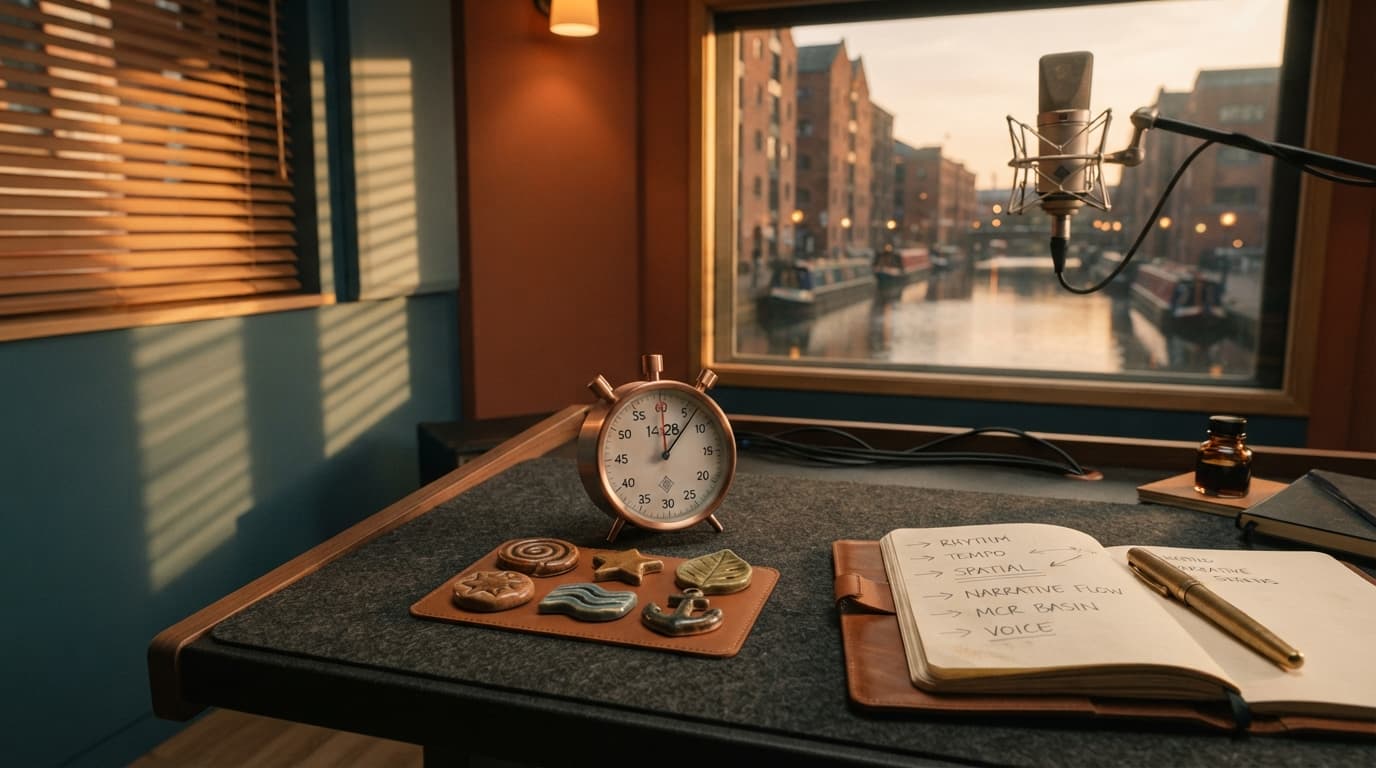
Mastering the IELTS Speaking Part 2 Cue Cards in 2026
Preparing for the ielts speaking part 2 cue cards 2026 rotation can feel overwhelming if you try to memorise every topic circulated online. Candidates sitting the test across British Council and IDP centres face a pool that updates tri-annually (January–April, May–August, and September–December), with roughly 50 percent of prompts rolling over and the other 50 percent replaced by brand-new or recycled cards. Trying to cram pre-scripted responses for 70 to 80 potential topics is not only exhausting, but it also virtually guarantees a flat, unnatural delivery that examiners immediately mark down under Fluency and Coherence and Pronunciation.
The secret to scoring Band 7.5 or higher does not lie in predicting the exact card you will turn over in the interview room. Instead, it lies in categorising the entire cue card bank into five universal master archetypes, mastering a 60-second shorthand planning framework, and pacing your uninterrupted two-minute monologue with surgical precision. Whether you sit the paper-based test or the computer-delivered version via in-person examiner or video-call speaking, this modular system gives you total control over your response.
The 5 Master Cue Card Archetypes
Every single topic card issued in the 2026 speaking pool falls cleanly into one of five structural categories: Person, Place, Object, Event, or Activity. Rather than drafting distinct stories for dozens of disparate prompts, you only need to develop two rich, flexible core narratives per archetype that you can pivot to suit the specific wording on the card.
1. The Person Archetype
Prompts in this family ask you to describe an interesting neighbour, an inspiring leader, an ambitious colleague, a skilled teacher, or an elderly person you respect. Develop a detailed persona—such as a senior mentor who guided you through an intense academic or professional challenge. You can adapt this central figure whether the card asks about someone who taught you an important life skill, a person who dresses unusually, or a creative individual you admire.
2. The Place Archetype
These cue cards focus on historic towns, quiet outdoor retreats, vibrant urban developments, or unusual cafes. Build a mental landscape of a multi-layered setting—such as an independent bookshop-cafe situated in a historic quarter. This single location easily answers prompts regarding a peaceful place to study, an eco-friendly building, a historic site you visited, or a business that benefits its local community.
3. The Object Archetype
From modern gadgets and heirlooms to pieces of clothing, handmade gifts, or sustainable products, the object archetype tests descriptive precision. Choose a tangible item with functional complexity and emotional resonance, such as a high-end fountain pen gifted upon passing an entrance exam or a specialised mechanical keyboard used for your daily research work.
4. The Event Archetype
Event cue cards encompass celebrations, unexpected delays, life-changing announcements, or competitive ceremonies. Having a narrative that hinges on a challenging project launch, a local festival, or a disrupted travel journey lets you address cards about a time you solved an unexpected problem, a celebration you attended, or a public event you enjoyed.
5. The Activity Archetype
This category includes sports, creative hobbies, volunteering initiatives, or habits developed to maintain well-being. A disciplined pursuit such as long-distance cycling or film photography allows you to pivot effortlessly across cards asking for an outdoor leisure activity, a creative pastime you tried for the first time, or an activity you do to stay healthy.
The 1-Minute Note-Taking System: Shorthand Grids
When the examiner hands you the cue card along with a pencil and blank sheet of paper, you have exactly 60 seconds to prepare. Do not waste precious seconds writing full sentences or copying bullet points from the prompt. By the time you draft your second complete sentence, your prep time will have expired.
Instead, draw a rapid four-box cross grid on your sheet, representing a dynamic narrative arc: Context, Complication, Resolution, and Impact. Fill each quadrant with maximum two or three shorthand trigger words, focusing exclusively on less common lexical items, topic-specific collocations, and high-level discourse markers.
Box 1: Context (0–30 Seconds)
• Trigger words: who, where, historical background.
• Language focus: past continuous and past perfect structures (had been pursuing, was situated in the outskirts).
Box 2: Complication or Core Detail (30–70 Seconds)
• Trigger words: the central conflict, complex mechanics, or emotional hurdle.
• Language focus: contrastive discourse markers (paradoxically, an unforeseen stumbling block, intricate).
Box 3: Resolution or Turning Point (70–100 Seconds)
• Trigger words: decisive action, learning moment, or aesthetic shift.
• Language focus: modal verbs of deduction and idiomatic phrasing (we managed to navigate the hurdle, proved immensely rewarding).
Box 4: Impact and Future Reflection (100–120 Seconds)
• Trigger words: enduring significance, personal transformation, or future outlook.
• Language focus: third conditional or mixed hypothetical conditionals (had it not been for that experience, I wouldn't have developed...).
Pacing the 2-Minute Monologue Without Stalling
One of the most frequent reasons test takers fail to achieve Band 7.0 or 8.0 in Part 2 is poor temporal awareness. Candidates either rush through their notes and hit a dead end after 65 seconds, forcing an awkward silence before the examiner prompts them, or they spend 90 seconds setting the scene and get cut off before addressing the critical bullet points.
Understand this: examiners will intentionally let you speak for the full two minutes, stopping you only when you cross the 120-second threshold. Getting cut off politely by the examiner while expanding on your final reflection is completely normal and carries no penalty; running dry at 70 seconds damages your Fluency and Coherence rating severely.
To master your cadence, split your response into a four-phase chronological delivery:
• Phase 1 (First 30 seconds): Establish the backstory cleanly. Avoid generic intros like "Today I would like to talk to you about...". Dive straight in: "The person who immediately springs to mind when considering this prompt is...".
• Phase 2 (30–75 seconds): Expand on sensory details, atmosphere, and mechanics. If describing an event, paint the scene; if describing an object, outline its texture, provenance, and utility.
• Phase 3 (75–105 seconds): Introduce an illustrative anecdote or problem that arose. Real-life memories naturally feature obstacles, which immediately forces you to use varied, complex syntax.
• Phase 4 (105–120 seconds): Explain why this topic matters to you today and how it shapes your perspective. This reflective bridge naturally transitions into the broader, analytical themes you will encounter in Speaking Part 3.
Avoiding the Examiner Script Trap
Examiners conduct dozens of interviews every week. They can detect memorised answers within ten seconds. Tell-tale signs include unnaturally fast cadence that slows down to a crawl the moment an unscripted Part 3 question is asked, robotic intonation contours, and mismatched idioms shoehorned into irrelevant contexts.
To build genuine communicative competence, explore our articles on language test preparation to understand how lexical resource is graded across all four criteria. Rather than committing fixed scripts to memory, practice modular storytelling using real-time feedback. You can jump directly into targeted oral practice on Thinka to evaluate your speech pacing, speech-to-pause ratios, and lexical variety against official descriptors.
By combining the five master archetypes with a rock-solid shorthand note-taking strategy, you eliminate the dread of unpredictable 2026 cue cards. Learn to command your 1-minute preparation window, control your 2-minute cadence, and enter the examination room ready to speak with spontaneous, articulate conviction.
Related posts
- Oct 23, 2026
IELTS Raw Score Conversion Guide: Academic vs General Reading and Listening Marks
Convert your IELTS raw score out of 40 into official bands for Academic Reading, General Reading, and Listening. Learn score buffers and test equating rules.
- Oct 20, 2026
IELTS vs TOEFL vs PTE: Test Format, AI Scoring, and Concordance Guide
Choosing between IELTS vs TOEFL vs PTE? Compare AI and human marking engines, updated score concordances, test durations, and cognitive task demands.
- Oct 17, 2026
IELTS Score for Canada Student Visa: Post-SDS Rules, University Floors, and Study Permit Guidance
What IELTS score for a Canada student visa is needed after the SDS cancellation? Discover post-SDS IRCC rules, university cutoffs, and test requirements.
- Oct 11, 2026
IELTS Speaking Forecast: Navigating the 4-Month Rotation Cycle Without Rote Memorisation
Understand how the IELTS speaking forecast works across triannual pool rotations. Master the 50% turnover mechanics, avoid script penalties, and prepare modularly.