Secondary School Selection for Primary Students6 min read
The Niche Navigator: Strategic Talent Mapping for Your Child’s DSA-Sec Journey
Beyond the AL Score: The New Frontier of Secondary School Admissions
For decades, the Primary School Leaving Examination (PSLE) was the singular gatekeeper of secondary school placement in Singapore. However, as the Ministry of Education (MOE) shifts toward a more holistic landscape, the Direct School Admission for Secondary Schools (DSA-Sec) has evolved from a 'side door' for athletes into a sophisticated, highly competitive pathway for diverse talents. For parents of Primary 5 and 6 students, the challenge is no longer just hitting an Achievement Level (AL) of 4 to 8, but identifying a child’s unique 'spike'—that specific area of excellence that makes them an asset to a school’s niche culture.
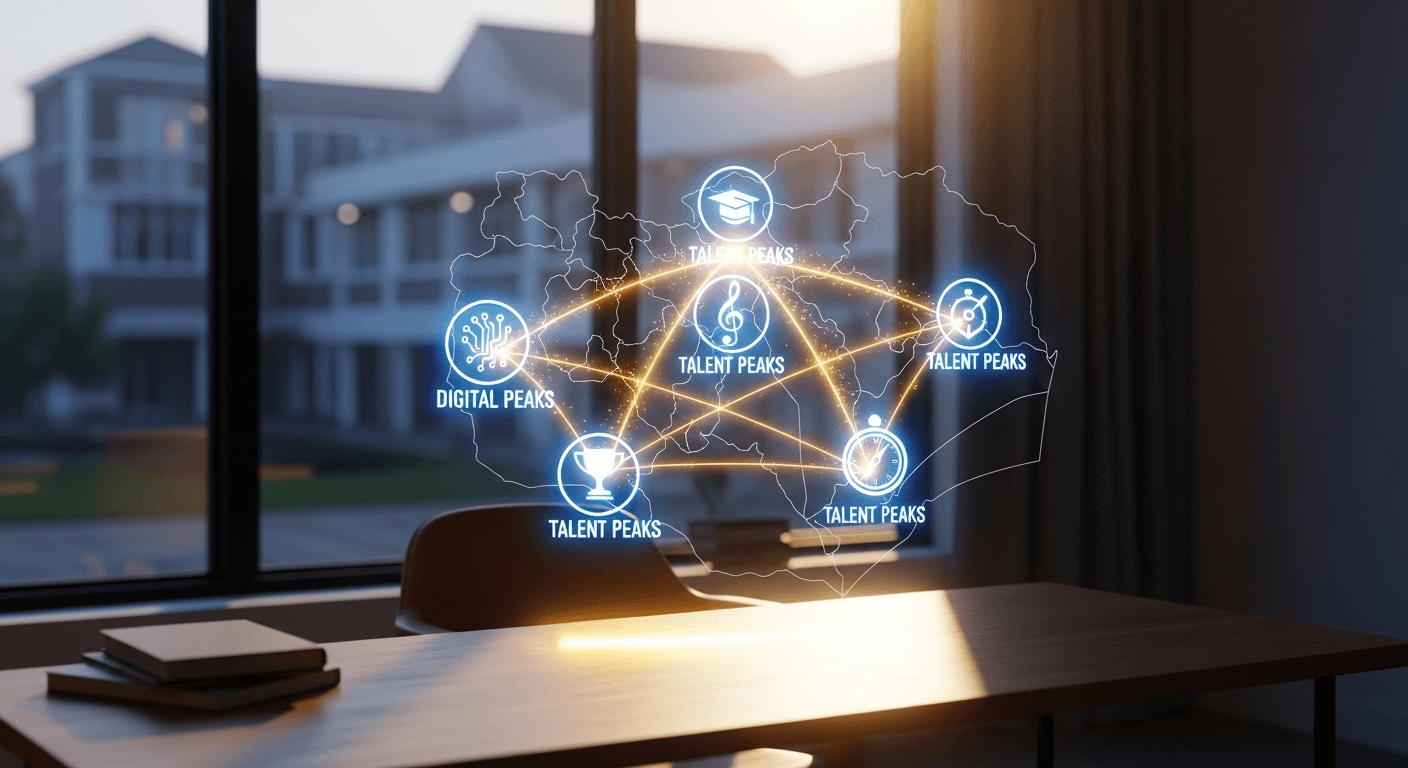
As we move into a more digital-centric era, the traditional 'scrapbook' portfolio is being replaced by evidence-based talent mapping. Schools are looking for more than just a list of trophies; they want to see a trajectory of passion, sustained interest, and the cognitive potential to thrive in specialized programs like the Integrated Programme (IP) or the School of Science and Technology (SST). This is where the concept of Strategic Aptitude Mapping becomes essential for every Singaporean household.
The Architecture of a 'Spike': Moving Beyond the Well-Rounded Student
In the past, parents often felt the need to enroll their children in every possible enrichment class—piano, swimming, coding, and debating—hoping to create a 'well-rounded' profile. However, top-tier schools like Raffles Institution, Hwa Chong, or Nanyang Girls’ High often look for 'spikes' rather than 'circles.' A spike is a deep, vertical expertise in a specific domain that differentiates a student from a sea of applicants with similar academic grades.
Using AI-powered tools and data-driven reflection, parents can now audit their child’s past three years of Primary 3 to Primary 5 activities to find these spikes. Is your child simply 'good at math,' or do they possess the 'computational thinking' required for a DSA in Robotics? Are they just 'helpful in class,' or have they demonstrated 'Social Innovation' through a Values in Action (VIA) project? Categorizing these experiences into formal niches—STEM, Leadership, Humanities, or Visual Arts—is the first step in the Niche Navigator strategy.
Using AI to Decode School Niche Requirements
Every secondary school in Singapore has a unique DNA. A student who is a perfect fit for the 'Innovation and Enterprise' niche at Dunman High might not align with the 'Community Youth Leadership' focus at Victoria School. Manually researching every school’s DSA criteria is a Herculean task for busy parents. This is where AI-powered learning platforms and diagnostic tools can assist by analyzing a child's strengths and matching them against the talent domains of 140+ secondary schools.
By inputting a child's achievements, a parent can use AI to identify 'Domain Alignment.' For example, if a child spends their weekends building Minecraft worlds and volunteering at animal shelters, AI can help reframe these as 'Spatial Reasoning' and 'Service Leadership.' This allows parents to target schools where the child’s existing interests overlap with the school’s specific CO (Confirmed Offer) history. This targeted approach prevents 'application fatigue,' where students apply for six different domains and fail to secure a spot in any because their profile was too diluted.
From Hobbies to 'Demonstrated Interest': Building the Digital Portfolio
The DSA application portal is the first touchpoint, but the interview and trial are where the 'Confirmed Offer' is won. To get there, a student needs a portfolio that proves sustained growth. In the Singapore context, this is often documented through the Student Portfolio in the School Cockpit, but parents can go further by curating a digital 'Growth Log.'
Practical Tip: Encourage your child to use personalized practice sessions to maintain their academic baseline while they focus on their niche. A strong portfolio cannot save a student if their PSLE score doesn't meet the school’s minimum qualifying criteria. The formula for a successful DSA entry can be thought of as:
\( P = (T \times E) + A \)
Where P is the Probability of a Confirmed Offer, T is Talent evidence, E is Engagement in the niche, and A is the Academic safety net.
Three Key Pillars of a Modern DSA Portfolio:
1. The Narrative of Progress
Instead of just showing the Grade 8 ABRSM certificate, show the journey. Did the student compose their own piece? Did they lead a sectional in the school orchestra? Use AI to help your child articulate the process of their learning. This is particularly vital for STEM domains, where schools now prioritize 'Design Thinking' over just winning a trophy in a science fair.
2. Quantifiable Impact
In Leadership and Service niches, vague statements like "I was a prefect" carry little weight. Schools want to see the Reach and Depth of the student's influence. Did they initiate a recycling program that reduced school waste by 20%? Did they mentor five younger students in the reading program? Quantifying these achievements makes the portfolio data-backed and credible.
3. Cognitive Agility
Many schools now conduct 'General Ability Tests' (GAT) or 'Higher-Order Thinking' interviews as part of the DSA process. Students are asked to solve unseen problems or debate contemporary issues. Parents can use targeted study resources to build these critical thinking skills, ensuring that the student doesn't just look good on paper but can perform under pressure during the selection trials.
The Role of Academic Stability in the DSA Strategy
One common pitfall for Singaporean parents is focusing so heavily on the 'niche' that the child’s academic performance dips. It is a stressful irony that a student who spends 20 hours a week on competitive fencing to get into a top school may find themselves unable to meet the AL requirements for that very school.
Strategic parents use AI to optimize study time. Instead of mindless drilling, they use adaptive platforms to identify exact knowledge gaps in Math and Science, allowing the student to achieve better results in less time. This 'freed-up' time is then reinvested into the talent domain. This synergy between academic efficiency and talent development is the hallmark of a successful Primary 6 strategy.
Preparing for the 'Human' Element: The Interview
The final hurdle of the DSA is the interview. Interviewers at IP schools are trained to spot 'over-coached' children. They want to see the real student behind the achievements. Parents can use AI to simulate mock interview scenarios, asking the child to explain their 'Why.' Why this school? Why this niche? Why do you keep practicing when it gets difficult?
Teaching a 12-year-old to narrate their learning journey—including their failures—is incredibly powerful. A student who can explain how they overcame a setback in a coding project is often more impressive than one who simply shows a perfect finished product. This demonstrates 'growth mindset,' a key trait looked for by educators in the Singapore secondary system.
Conclusion: Mapping the Future
The transition from primary to secondary school is a significant milestone in a Singaporean child's life. By treating the DSA process as a 'Niche Navigation' exercise rather than a desperate hunt for a school spot, parents can help their children discover their own strengths. Whether your child is a budding scientist, a passionate orator, or a dedicated athlete, the goal is to build a profile that is authentic, evidence-based, and strategically aligned with the right school.
By leveraging modern tools to manage the academic load and refine the talent narrative, you ensure that your child doesn't just get into a 'top school,' but the *right* school for their unique DNA. Start early, map the spikes, and let your child's natural talent lead the way.
Related posts
- May 21, 2026
The Curricular Compass: Using AI Cognitive Profiles to Navigate Full SBB and IP Pathway Selection
Stop choosing secondary schools based on brand alone. Learn how to use AI learning data to match your child’s cognitive profile with Singapore’s Full SBB and IP pathways.
- May 11, 2026
The Secondary Transition Audit: Evaluating Schools on Executive Functioning and Independent Study Readiness
Moving from PSLE to Sec 1 requires a shift from dependence to autonomy. Learn how to evaluate Singapore secondary schools based on their executive function support systems.
- May 1, 2026
The Digital Handshake: Auditing AI Ethics and Screen-Time Autonomy in Your Singapore Secondary School Search
As primary students transition to 1:1 devices in Secondary 1, parents must evaluate schools on digital wellness and AI ethics. Learn what to look for beyond the tech hardware.
- Apr 21, 2026
The AQ Compass: Assessing Secondary Schools on Collaborative Intelligence and Adaptability
Looking beyond academic league tables? Discover how primary parents can assess prospective secondary schools for Adaptive Intelligence (AQ) and collaborative problem-solving.