Further Studies Guide6 min read
The Interdisciplinary Architect: Mapping GCE A-Level Subjects to Singapore’s New Hybrid Degree Era
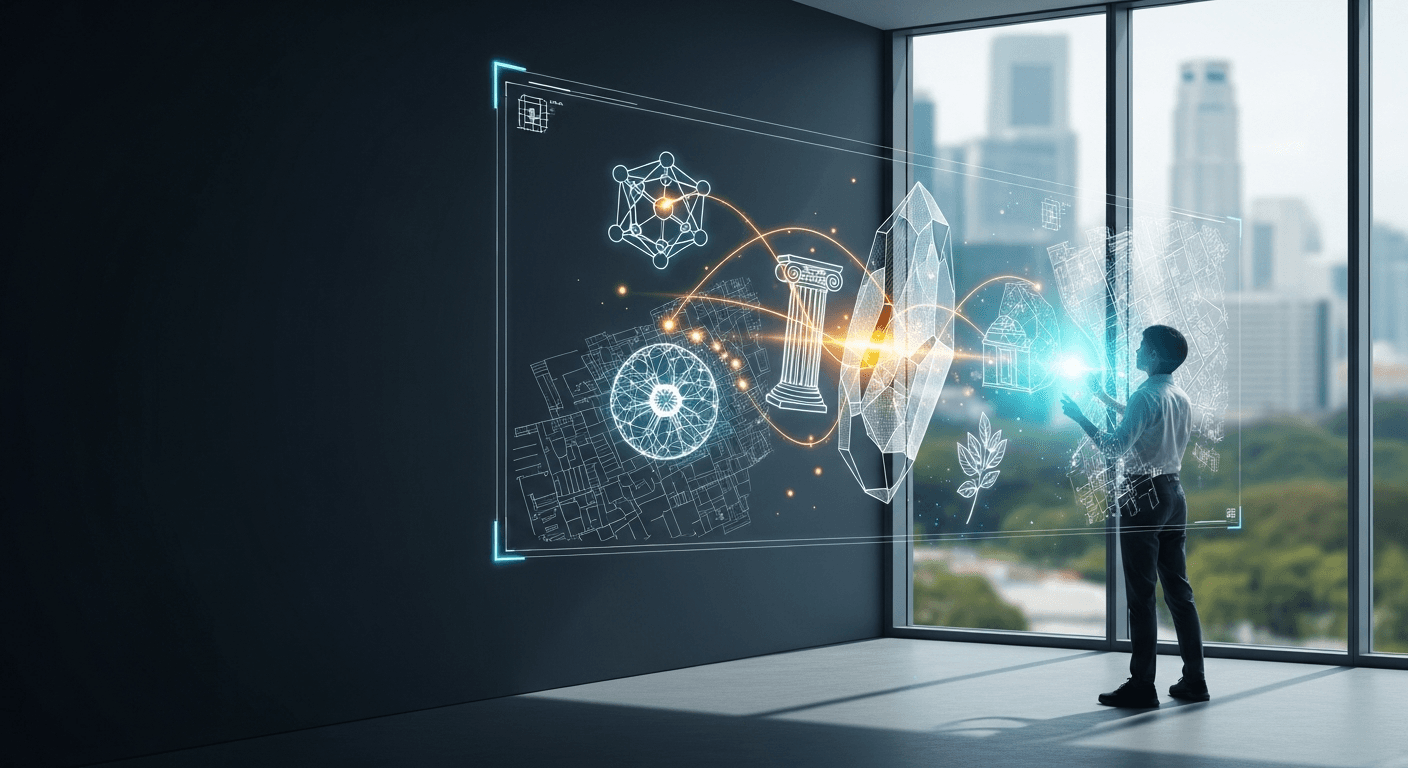
The Silo Problem in a Transdisciplinary World
For decades, the path through the Singapore education system was clearly demarcated. You were either a ‘Science Student’ or an ‘Arts Student.’ If you took PCME (Physics, Chemistry, Mathematics, Economics), your trajectory was likely Engineering or Medicine. If you took HELM (History, Economics, Literature, Mathematics), Law or the Social Sciences awaited. However, the ground in Kent Ridge and Jurong West has shifted. With the launch of the NUS College of Humanities and Sciences (CHS) and NTU’s increased focus on Interdisciplinary Collaborative Core (ICC) modules, the wall between disciplines has crumbled. Universities are no longer looking for specialists who only understand their own narrow field; they are hunting for ‘hybrid’ thinkers.
The challenge for many GCE O-Level and A-Level students is that the national curriculum, while rigorous, often remains siloed. You might be mastering the Krebs Cycle in H2 Biology or the nuances of the Cold War in H2 History, but you are rarely asked to find the nexus between them. This gap creates a strategic risk during university admissions. When applying for competitive hybrid majors like Data Science and Economics, Computational Biology, or Humanities and AI, students struggle to explain why their ‘traditional’ subject combination makes them a fit. This is where AI moves from being a simple revision tool to becoming a Curriculum Architect.
The Rise of the 'CS + X' and Hybrid Degrees in Singapore
Look at the current landscape of Singaporean higher education. NUS now offers ‘X + Computer Science’ pairings, while SMU’s flexible double majors encourage students to bridge disparate fields like Psychology and Information Systems. These programs require more than just high RP (Rank Points) or straight As. They require a narrative of intellectual synthesis. Admissions officers want to see how your H2 Mathematics logic informs your understanding of H2 Literature’s thematic structures, or how H2 Chemistry’s molecular modeling links to H2 Economics’ supply chain theories.
The ‘Degree Hybridizer’ strategy involves using AI to audit your current subjects and identify the ‘missing links.’ By treating your A-Level syllabus as a data set, you can use AI to map out how specific topics in your curriculum serve as the foundation for these emerging transdisciplinary fields. This allows you to build a super-curricular portfolio that goes far beyond the standard CCA records and community service projects.
Using AI to Build the 'Logical Bridge'
How do you actually do this? Most students look at their subjects as separate folders in a filing cabinet. To stand out, you need to see them as a network. You can use AI to act as a bridge between your H2 subjects and your target degree. For example, if you are a Science stream student aiming for a degree in Urban Studies or Sustainability, you can use AI to query the intersection of H2 Physics (Energy and Thermodynamics) and H2 Geography (Sustainable Development).
Instead of just practicing past-year papers on AI-powered practice platforms, you can prompt an AI to: 'Identify three conceptual links between the A-Level H2 Physics topic of Quantum Physics and the philosophical inquiries found in H2 Knowledge and Inquiry (KI).' This type of deep-level synthesis is exactly what interviewers at top-tier universities are looking for during the Early Admissions Exercise (EAE) or the A-Level Admissions cycle. It demonstrates that you don’t just ‘study for the exam,’ but that you possess the lateral thinking required for the modern economy.
Practical Step: The AI-Driven 'Subject Audit'
To begin mapping your own hybrid path, follow this three-step framework using AI as your consultant:
1. The Thematic Overlay
Take a specific topic from each of your H2 subjects. Ask an AI: 'I am studying H2 Economics (Market Failure) and H2 Biology (Genetics). How do these two concepts intersect in the field of Bio-Economics and Bio-Ethics?' The AI will likely point you toward the ‘tragedy of the commons’ in genetic resources or the economic cost of public health interventions. This gives you a unique talking point for your personal statement that 99% of other applicants will miss.
2. The Technical Translation
If you are aiming for a tech-heavy hybrid degree (like Business Analytics), use AI to translate your humanities skills into technical logic. Ask: 'How does the evidence-based argumentation used in H2 History essays mirror the data validation processes in Data Science?' Understanding that a ‘cross-reference’ in History is a form of data triangulation helps you frame your ‘Arts’ background as a ‘Data’ asset.
3. The Gap Analysis
Identify a degree you want (e.g., NTU’s Philosophy, Politics, and Economics - PPE). Ask an AI to identify the skills that your current subject combination (e.g., PCME) is missing for that degree. Once you know the gap, you can use personalized AI study support to explore those specific niche areas through independent research projects or H3-level inquiries.
Beyond Grades: Proving Transdisciplinary Competence
In the Singaporean context, high grades are often the baseline, not the differentiator. To truly stand out, you must prove you can operate across domains. This is what we call building a 'Transdisciplinary Portfolio.' When you use AI to find these connections, you aren't just 'cheating' the system; you are training your brain to think like a researcher. You are moving from a passive consumer of a syllabus to an active architect of your education.
Teachers and educators also play a vital role here. By using tools that allow them to generate practice papers that incorporate cross-disciplinary stimulus material, they can help students prepare for the 'unseen' contexts that are becoming more common in the GCE A-Level General Paper and H2 Humanities papers. The goal is to make the leap from JC to University feel like a natural progression rather than a jarring shift in logic.
The Strategic Advantage for 2025 and 2026 Admissions
As we move into the 2025 and 2026 admissions cycles, the 'Hybrid Degree' trend will only accelerate. The Singapore government’s focus on SkillsFuture and lifelong learning emphasizes the need for 'T-shaped' individuals—those with deep expertise in one area and broad competence across many. By starting this 'mapping' process during your O-Levels or A-Levels, you give yourself a massive head start.
Don't just view your subjects as hurdles to be cleared for a certificate. View them as the raw materials for a unique academic identity. Use AI to help you see the patterns that others miss. Whether it's finding the mathematical beauty in a Shakespearean sonnet or the historical legacy behind a chemical patent, the ability to bridge these worlds is the most valuable skill you can develop before you even step foot onto a university campus.
Actionable Tips for Singaporean Students
1. Rewrite your 'Why this course?' essay: Stop saying you like Chemistry. Instead, explain how your foundation in Chemistry, combined with your interest in Mathematics, makes you a prime candidate for a hybrid major in Molecular Modelling.
2. Use AI for Socratic Debate: If you take H2 Economics and H2 History, ask an AI to roleplay a debate between an economist and a historian on the impact of the 1997 Asian Financial Crisis. This builds the 'multi-perspective' mindset required for hybrid degrees.
3. Audit your CCA: If you are in Robotics, use AI to find connections to your Literature syllabus. Can you write a piece on the 'Ethics of Automation' that uses both your technical knowledge and your literary analysis skills? This is 'Super-Curricular' gold.
The era of the siloed student is over. By using AI as your degree hybridizer, you can transform your traditional GCE subjects into a future-ready, transdisciplinary powerhouse. Start exploring those hidden connections today, and build a profile that no admissions committee can ignore.
Related posts
- May 28, 2026
The Global Portfolio Translator: Re-indexing A-Level Achievements for Multi-Jurisdiction Admissions
Learn how Singaporean students can use AI to pivot between UK academic depth and US holistic requirements, maximizing global admission odds without the burnout.
- May 18, 2026
The Independent Scholar’s OS: Building a Digital ‘Second Brain’ for the GCE to University Leap
Transitioning from A-Levels to Uni? Learn how to build a digital Personal Knowledge Management (PKM) system to handle the 10x increase in academic volume using AI.
- May 8, 2026
The AI+X Dividend: Navigating New Interdisciplinary Degree Pathways for Singaporean Students
Unlock the future of university admissions. Learn how O and A-Level students in Singapore can leverage the 'AI + X' strategy to secure spots in elite hybrid degree programmes.
- Apr 28, 2026
The Interdisciplinary Edge: Mapping Your A-Level Subjects to Singapore’s Dual-Competency Degree Revolution
Discover how to pair your GCE O and A-Level subjects for high-ROI hybrid degrees at NUS and NTU. Learn to bridge STEM and Humanities for the future economy.