Secondary School Selection for Primary Students6 min read
Middle and Secondary School Interview Questions: The 5 Archetypes and Prep Blueprint
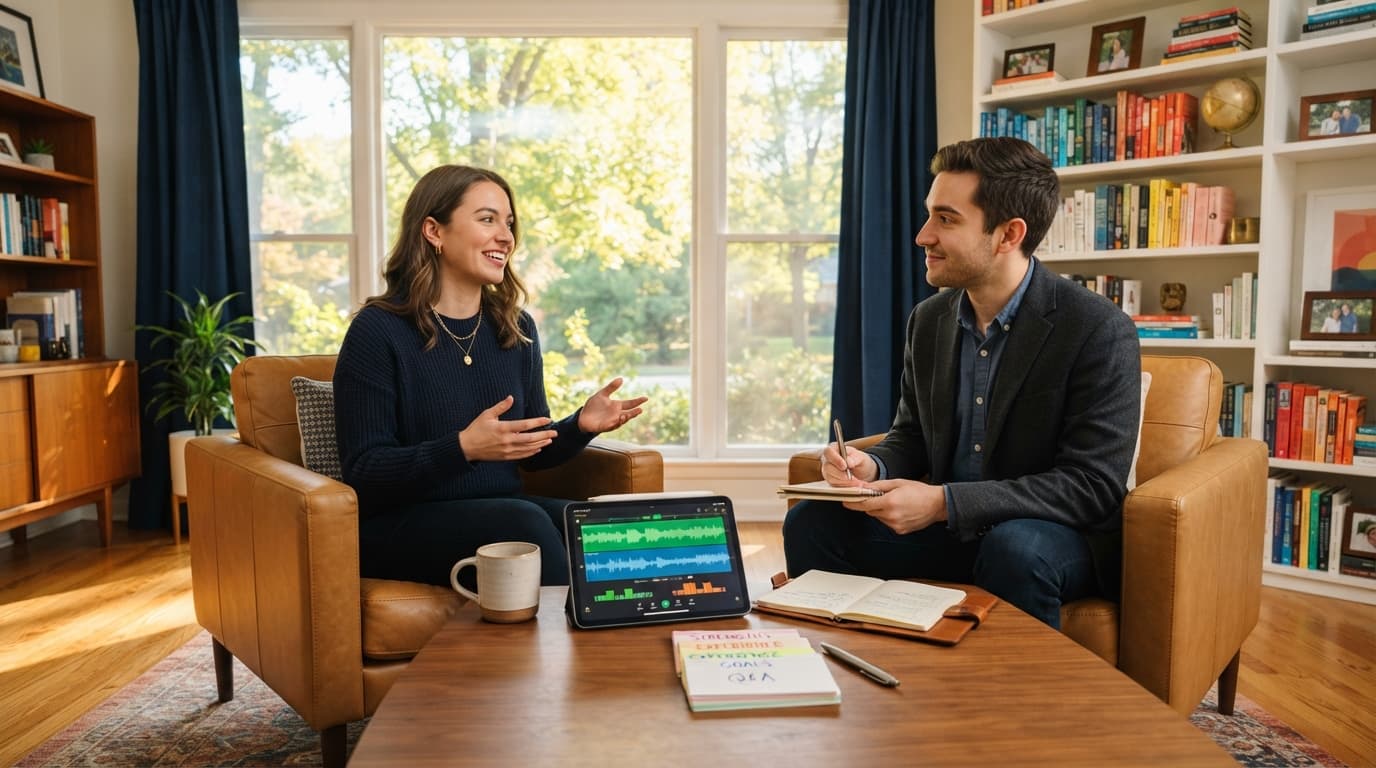
Cracking the Code on Secondary School Interview Questions
When applying to selective independent day schools, competitive magnet programs, or junior boarding academies, the admissions interview often carries just as much weight as ISEE or SSAT scores. For rising 5th and 6th graders, facing an admissions director across a conference table can feel intimidating. Many parents search frantically for secondary school interview questions, hoping a list of 100 sample prompts will prepare their child for the big day.
However, memorizing canned scripts backfires. Admissions committees conduct interviews between January and March specifically to peel away parental coaching and assess conversational poise, genuine intellectual curiosity, and self-awareness. Rather than drilling robotic answers, your child needs to understand the five core question archetypes, master a repeatable response structure, and practice spontaneous dialogue in low-stakes settings.
What Admissions Panels Actually Score: The Silent Rubric
Admissions evaluators rarely grade on whether an answer is objectively "right." Instead, they assess your child across four distinct behavioral dimensions:
- Conversational Authenticity: Does the applicant speak from personal experience, or are they reciting a rehearsed speech crafted by an adult? Phrases that sound overly sophisticated for a 10-year-old trigger immediate skepticism.
- Intellectual Agility: How does the student react when confronted with a question they cannot anticipate? Admissions teams favor students who pause, think out loud, and demonstrate curiosity over those who panic when off-script.
- Community Orientation: Selective secondary programs look for collaborative peers. Evaluators observe how students talk about group projects, conflict resolution, and empathy toward classmates.
- Self-Reflection and Resilience: Can the student discuss a real setback—such as a difficult math quiz or a lost soccer tournament—without deflecting blame onto teachers or teammates?
Families can explore structured curriculum benchmarks through our comprehensive study resources and subject guides to build underlying academic confidence before interview season kicks off.
The 5 Core Question Archetypes You Must Prepare For
Almost every question asked during a 20-to-30 minute middle or secondary school admissions meeting falls into one of five functional categories:
1. Personal Motivation & Self-Reflection
These questions establish rapport and test how well your child understands their own learning style and interests.
- "What subject makes time fly by for you, and which one makes you watch the clock?"
- "Tell me about a project or activity you pursued outside of school purely because you wanted to learn more about it."
- "If your 5th-grade teacher had to describe you in three words, what would they say, and would you agree?"
2. Academic Lateral Thinking
Instead of testing raw computation or vocabulary recall, these questions evaluate cognitive flexibility and analytical reasoning.
- "If you could design a new law that everyone in our city had to follow for one week, what would it be and why?"
- "Would you rather discover a new planet or explore the deepest part of the ocean? Walk me through your decision."
- "How would you explain the concept of internet connectivity to someone living in the 18th century?"
3. Ethical Dilemmas & Character Scenarios
Schools want to understand your child's moral compass, honesty, and emotional maturity under social pressure.
- "You see your close friend looking at their notes during a closed-book science test. What do you do in the moment, and what do you do afterward?"
- "Imagine you worked hard on a group presentation, but one partner didn't contribute anything. How do you handle credit when presenting to the teacher?"
- "Tell me about a time you made a poor choice. How did you make it right?"
4. Current Affairs & Community Awareness
Admissions officers love to see whether an applicant engages with the world outside their immediate bubble.
- "What is one problem in your local neighborhood or school community that you wish you had the resources to fix?"
- "Have you read or heard about any recent news story that caught your attention lately?"
- "If you were given a budget of $500 to improve student life at your current school, how would you spend it?"
5. Group Dynamics & Collaborative Problem-Solving
Many independent schools pair individual interviews with group tasks, where 4 to 6 applicants complete an engineering challenge or discuss a short passage together.
- "When your group cannot agree on an idea, what role do you usually take to keep things moving?"
- "Tell me about a time someone disagreed with your plan. How did you respond?"
Admissions evaluators actively penalize students who dominate discussions or talk over peers during group assessments. Listening attentively and building upon another child's comment—saying, for example, "I like what Alex mentioned about building the base first, and we could also reinforce the corners"—earns top marks.
The PER Framework: How to Answer Spontaneously
To keep young learners from freezing or rambling, teach them the simple PER Response Model: Point, Example, Reflection.
- Point: State your direct answer clearly in the first sentence. Avoid circling around the topic.
- Example: Share a short, specific story or concrete detail that backs up your point.
- Reflection: Explain what that experience taught you, how it changed your perspective, or why it matters for your future learning.
Here is how a 5th grader can use PER when asked: "Tell me about a subject you find challenging."
Point: "Fractions and long division in math were definitely tough for me earlier this year."
Example: "When we started multi-step word problems involving fractions, I kept losing track of common denominators, and my first quiz score was much lower than I wanted."
Reflection: "Instead of getting discouraged, I asked my teacher for extra review sheets during recess and practiced ten minutes each night. It taught me that getting stuck isn't failure—it just means I need to break the problem into smaller parts."
Notice how this response transforms a potential weakness into proof of coachability, resilience, and executive function.
Practicing at Home: Using AI Simulation Without Over-Scripting
The biggest pitfall in interview preparation is "parental echo"—when a student recites buzzwords like "holistic pedagogy" or "rigorous collegiate atmosphere" fed to them by well-meaning parents. Admissions panels see right through this facade.
To build genuine conversational resilience, simulate dynamic interviews using an interactive approach. You can input admissions prompts into modern conversational tools to act as an interviewer, asking follow-up questions that push your child to elaborate naturally. Educators also rely on tools where teachers generate custom diagnostic tasks and prompts to test critical thinking across subjects.
To prepare your student for the academic and reasoning components that admissions panels often test, you can have them start practicing with our adaptive learning engine, which pinpoints analytical gaps and sharpens critical problem-solving skills in real time.
The Final 5 Minutes: Asking Insightful Questions
At the conclusion of the interview, the panel will inevitably ask: "Do you have any questions for us?"
Answering "No, you covered everything" misses a prime opportunity to demonstrate authentic interest. Advise your child to steer clear of questions easily answered on the school's website homepage (such as "Do you offer robotics?"). Instead, encourage them to ask questions that reflect their passions and invite the interviewer's personal perspective:
- "What is a favorite tradition that middle school students look forward to every year?"
- "If I wanted to start a creative writing club or lunch discussion group, how does the school help students launch new initiatives?"
- "What kind of student seems to thrive the most in your classroom culture?"
By shifting the dynamic from a one-sided interrogation to a thoughtful dialogue, your child leaves a lasting, positive impression. Discover how Thinka supports comprehensive academic mastery and test readiness to give your student the confidence they need on admissions day.
Related posts
- Oct 10, 2026
Do Middle Schools Use Elementary Test Scores for Tracking? 5th Grade Placement Decoded
Discover whether middle schools use 5th grade state test scores and fall diagnostics for honors tracking, how it impacts AP and SAT pathways, and how to advocate.
- Sep 30, 2026
Secondary School Cut Off Points: PSLE AL Scoring Matrix, Posting Bands, and Strategic Ranking Guide
Master secondary school cut off points, PSLE AL score bands, Full SBB posting groups, tie-breaker rules, and a 3-tier choice ranking strategy for your child.
- Sep 20, 2026
11 Plus Pass Marks by Region: Standardized Age Scores, Regional Cut-Offs, and Placement Benchmarks
Demystify 11 plus pass marks by region. Learn how Standardized Age Scores (SAS) work, compare regional benchmarks, and navigate cut-offs before application deadlines.
- Sep 9, 2026
Middle School Choice Ranking Strategy: How to Hedge Lottery Risks and Master Public School Matching Systems
Master your middle school choice ranking strategy. Learn how deferred acceptance algorithms work, hedge lottery cut-offs, and secure top magnet placements.