Latest News5 min read
The Digital Exam Frontier: Mastering the 'Screen-to-Score' Shift for 2025 AP and SAT Success
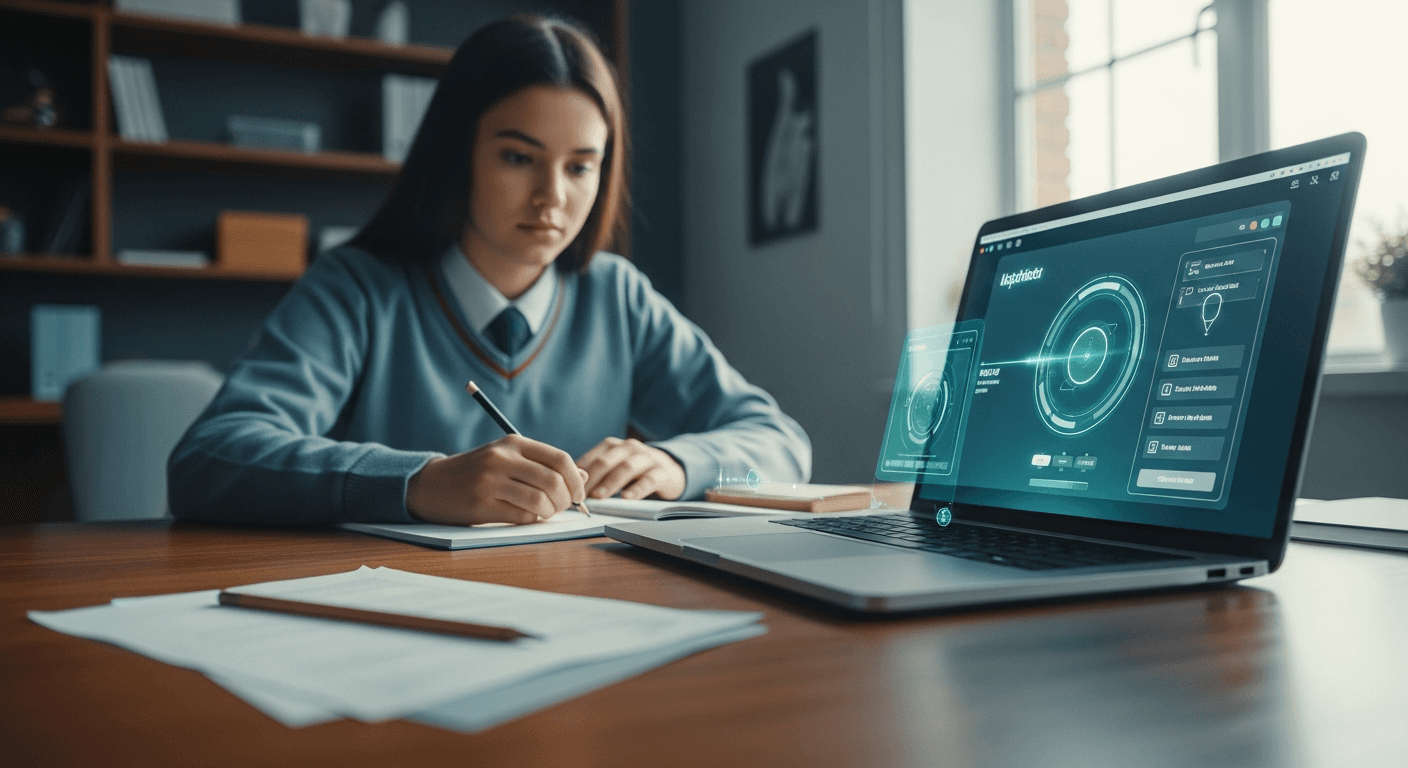
Beyond the #2 Pencil: The New Reality of High-Stakes Testing
For decades, the American high school experience was defined by the scratch of #2 pencils on Scantron bubbles. But as we move into the 2025-2026 academic cycle, that era is officially coming to a close. The College Board has fully transitioned the SAT to a digital format, and the Advanced Placement (AP) program is following suit at an unprecedented pace. By May 2025, 28 AP exams—including heavyweights like AP English Language, AP World History, and AP Psychology—will be administered through the Bluebook app.
This isn't just a change in medium; it’s a change in cognitive demand. Research into computer-based testing (CBT) suggests that students often struggle with 'screen fatigue' and a decreased ability to perform deep-tissue reading compared to paper-based assessments. Success in 2025 requires more than just knowing the curriculum; it requires mastering the digital interface. At Thinka, we believe that leveraging AI-powered study tools is the fastest way to bridge this digital divide.
The Cognitive 'Navigation Load': Why Digital is Different
When you read a passage on paper, your brain creates a spatial map of the text. You remember that a key piece of evidence was 'near the bottom left of the third page.' On a screen, especially one requiring scrolling, that spatial anchoring disappears. This is known as navigation load—the mental energy spent moving through a digital interface rather than solving the problem at hand.
For AP students tackling complex Free Response Questions (FRQs) or the Digital SAT's reading and writing modules, this load can lead to unforced errors. To combat this, students must transition from passive scrolling to active digital interrogation. This means utilizing the platform's specific tools—like the strike-through feature for process of elimination and the digital annotator—until they become second nature. You can find free study materials that simulate these digital environments to help build this muscle memory.
Strategic Calibration for the 2025 AP Digital Transition
The 2025 AP exam shift is split into two main categories: Fully Digital and Hybrid. Understanding which category your exams fall into is the first step in your 2026 prep strategy.
1. Mastering the Bluebook Interface
The Bluebook app is now the universal gateway for the SAT and most AP exams. One of the most significant changes is the integrated Desmos Graphing Calculator. While having a high-powered calculator built-in is an advantage, students who aren't fluent in Desmos syntax will lose precious minutes. For example, quickly graphing a system of equations like:
\( y = 2x + 3 \)
\( y = -x^2 + 5 \)
needs to be an instinctive action, not a moment of technical frustration.
2. The Scratch Paper Paradox
Even in a digital exam, the College Board provides physical scratch paper. The 'Screen-to-Script' shift refers to the art of translating digital prompts into physical outlines. For AP History students (DBQs and LEQs), the challenge is reading primary sources on a split-screen while mapping out an argumentative thesis on paper. You must practice the 'look-up, look-down' rhythm to avoid losing your place in dense academic prose.
How AI Transforms Digital Test Prep
Generic practice tests are no longer enough. To succeed in 2025, you need to practice in an environment that mimics the adaptive nature of modern exams. The Digital SAT, for instance, uses Multistage Adaptive Testing (MST). If you perform well on the first module, the second module becomes significantly more difficult. This creates a psychological pressure cooker that paper tests simply can't replicate.
Using an AI-powered practice platform allows you to simulate this adaptive difficulty. AI can analyze your response time on specific digital tasks—like how long it takes you to find evidence in a digital text—and provide targeted drills to increase your 'digital fluency.' Furthermore, teachers can generate custom practice papers that reflect the specific technical constraints of the new 2025 rubrics, ensuring that students aren't surprised on game day.
Practical Tips for the 2025-2026 Cycle
To dominate your exams this year, incorporate these digital-first habits into your daily routine:1. Practice 'Digital Annotation': Stop printing out PDFs. Use highlighting and commenting tools in your browser or study apps to simulate the Bluebook experience. Focus on 'anchor words' that help you find your place after scrolling.2. Manage Your Visual Stamina: The '20-20-20' rule is your best friend. Every 20 minutes, look at something 20 feet away for 20 seconds. This reduces the eye strain that leads to 'silly mistakes' in the final 30 minutes of a 3-hour AP exam.3. Type Your Way to an 5: For AP English and History, your typing speed is now a variable in your score. If you struggle to hit 40-50 words per minute, your ability to produce a sophisticated, evidence-backed essay in the allotted time is at risk. Use AI to grade your practice essays against the latest 2025 digital rubrics to see if your 'quantity' is meeting the 'quality' threshold.
The Bottom Line: Adapt or Be Left Behind
The transition to digital-first assessment is a hurdle, but it's also an opportunity. Students who master the logistics of computer-based testing early will have a massive competitive edge over those who treat it like a paper test on a screen. By integrating AI into your workflow and treating digital navigation as a core skill—not just a background detail—you can turn the 2025 exam pivot into your greatest academic advantage.
Ready to start your digital-first prep? Explore how Thinka’s precision tools can help you master the 'Screen-to-Score' shift today.
Related posts
- Sep 29, 2026
AQA A-Level Grade Boundaries: Raw Mark Scaling, Component Weightings, and A* Benchmarks
Demystify AQA A-Level grade boundaries. Learn how raw marks scale across STEM and humanities papers, calculate A* cut-offs, and audit mock exams with AI.
- Sep 19, 2026
CIE A-Level Exam Dates: Master Timetable, Paper Session Codes, and Clash Protocols for US Students
Master the CIE A-Level exam dates, administrative zone key times, paper component codes, and official clash resolution rules with our backwards revision plan.
- Sep 8, 2026
Missed Your Conditional College Offer? Action Steps for AP Scores, Appeals, and Late Admissions
Learn what to do if you miss your college offer or AP score conditions. Follow our step-by-step triage for admissions appeals, late openings, and score retakes.
- Aug 29, 2026
Cambridge IGCSE Syllabus Changes: How to Audit Past Papers and Avoid Obsolete Topics
Navigate Cambridge IGCSE syllabus changes with ease. Learn how to audit deprecated topics, triage older past papers, and generate fresh practice questions with AI.