Secondary School Selection for Primary StudentsApr 1, 2026
The Taster Session Protocol: Gauging Peer Dynamics and Social Fit During Secondary Campus Visits
The Taster Session Protocol: Gauging Peer Dynamics and Social Fit During Secondary Campus Visits
As primary school comes to a close, parents and students face one of the most critical transitions in their educational journey: selecting the right secondary school. While open days are often filled with dazzling science demonstrations, pristine sports facilities, and impressive academic presentations, these curated experiences only tell half the story. The true indicator of whether your child will thrive in a new environment isn’t found in the brochure—it is found in the everyday interactions between the students themselves.
Welcome to The Taster Session Protocol. This is your strategic guide to looking past the glossy marketing to evaluate the peer dynamics and social fit of a prospective campus. For primary school parents deeply invested in their child's future, understanding the social ecosystem of a school is just as vital as reviewing their academic track record. After all, a student who feels socially secure is far more likely to excel academically.
Why Social Fit is the Ultimate Academic Catalyst
Recent educational trends highlight a powerful shift in how we view student success. Modern pedagogical research demonstrates a direct correlation between a student’s sense of belonging and their cognitive performance. When a child feels socially alienated, their brain remains in a state of low-level stress, which actively impedes memory retention and critical thinking. Conversely, a supportive peer environment acts as a catalyst for learning.
We can even think of this in terms of a simple conceptual formula: \( \text{Emotional Security} + \text{Academic Challenge} = \text{Optimal Student Growth} \). If the emotional security component is missing due to a poor social fit, the entire equation collapses. This is why taster sessions—those half-day or full-day experiences where prospective students "shadow" current classes—are absolute goldmines for observant parents.
Phase 1: Decoding the Unscripted Hallway Micro-Interactions
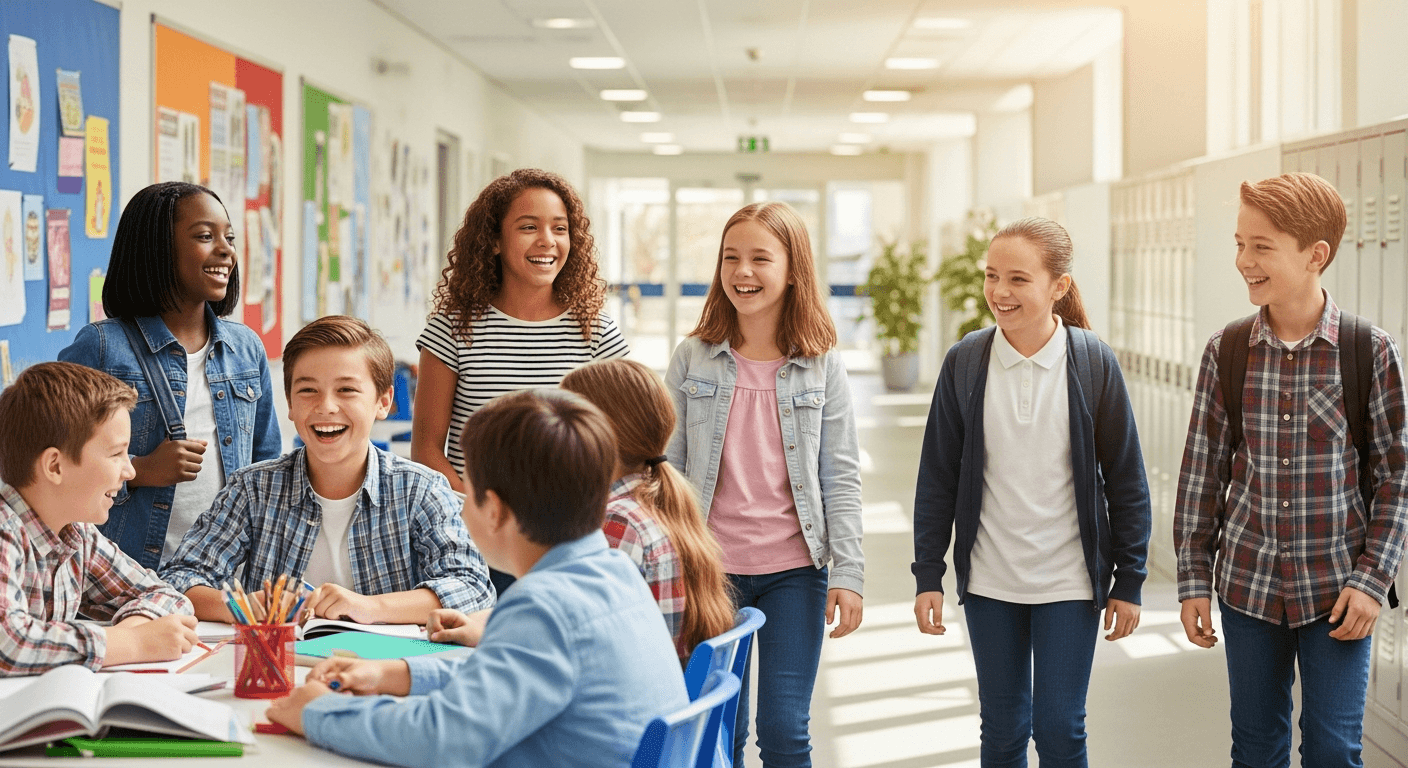
When you visit a campus, the most authentic moments happen between the scheduled events. The hallways during a bell transition are the true heartbeat of any secondary school. While your child is attending their taster class, take a moment to observe the corridors.
Pro Tip: The Invisible Culture Check
Watch how students navigate crowded spaces. Do older students bulldoze past younger ones, or is there a general atmosphere of spatial respect? Look for micro-interactions: a quick smile between peers, someone holding a door for a teacher, or students comfortably mixing in diverse groups. These unscripted moments reveal the genuine culture of the school far better than any rehearsed speech from the principal.
Pay attention to the volume and tone of the hallways. Is the energy chaotic and aggressive, or vibrant and collaborative? A healthy school environment will sound lively but not hostile. If you notice isolated students being routinely ignored by their peers, take mental note. Peer dynamics are contagious, and you want your child catching habits of empathy and inclusion.
Phase 2: The Classroom Collaboration Test
During a taster session, prospective students are often placed into group activities. This is a deliberate move by schools to assess how newcomers interact, but it is also your child's best opportunity to assess the school. Before the visit, coach your child on what to look for when they are sitting at those group tables.
Quick Fact: Peer Mentorship Over Competition
Top-tier secondary schools are increasingly moving away from cutthroat individual competition toward collaborative, project-based learning. The way current students treat a nervous newcomer speaks volumes.
Ask your child to observe the following during their taster class:
Did the current students introduce themselves?
When the teacher asked a difficult question, did students mock incorrect answers, or was risk-taking encouraged?
Did one student dominate the group work, or was there an equal distribution of voices?
These collaborative environments are where your child will spend the next several years. If the classroom culture encourages shutting down peers or hoarding information, it can severely stunt your child's academic confidence. On the other hand, an environment of intellectual generosity will inspire your child to reach new heights.
Phase 3: Re-Interviewing the Student Ambassadors
Student tour guides are usually handpicked because they are articulate and enthusiastic. However, instead of asking them standard questions about homework load or extracurriculars, use the Taster Session Protocol to dig into the social fabric.
Try asking these specific, dynamic questions:
"What happens if a Form 1 (or Year 7) student sits alone in the canteen during their first week?"
Listen closely to the answer. Do they mention a formal buddy system? Do they talk about a school culture where older students step in? If the ambassador hesitates or admits they aren't sure, it might indicate a lack of structured social support.
"How do students usually handle disagreements on group projects?"
This question reveals the conflict resolution culture of the school.
"If you could change one thing about the student culture here, what would it be?"
This gently forces the ambassador off their rehearsed script and provides you with a realistic glimpse into the school's social challenges.
Balancing Social Fit with Academic Readiness
Focusing heavily on peer dynamics is crucial, but it requires mental bandwidth from both you and your child. Often, families are so stressed about entrance exams, placement tests, and maintaining primary school grades that the taster session becomes just another high-pressure performance rather than an exploratory visit.
This is where leveraging modern educational technology changes the game. By integrating AI-powered learning into your child's daily routine, you can largely automate and streamline their academic progress. When a student uses an intelligent study platform, the technology adapts to their unique strengths and weaknesses, offering a highly personalized learning experience.
Instead of spending the night before a campus visit anxiously drilling flashcards or worrying about academic inadequacy, your child can relax. Innovative platforms handle the heavy lifting of exam preparation by identifying exact knowledge gaps and providing targeted exercises. This means your child walks into their taster session academically confident, allowing them to focus entirely on the social environment. They aren't worried about whether they can solve the math problem on the board; they are observing how the kids next to them behave.
To explore how intelligent study tools can reduce transition stress and build unshakeable academic confidence, visit the thinka Home Page.
The Post-Visit Debrief: Conversations That Matter
The car ride home after a taster session is the most crucial phase of the protocol. Primary school students often process complex social environments through simple feelings. If you ask, "Did you like it?" you will likely get a simple "Yes" or "No." Instead, use targeted questions to unpack their experience.
Guided Debrief Questions:
"Who was the most interesting person you sat next to today, and why?"
"Did you notice anyone who seemed to be a leader in the classroom? How did they treat the others?"
"If you dropped your books in the hallway here, do you feel like someone would help you pick them up?"
Listen not just to their words, but to their body language. A school might have top-tier academic rankings, but if your child's shoulders tense up when describing the lunchroom, the social fit is misaligned. Trust your child's intuition regarding peer dynamics.
Aligning Values: The Parent Network
Finally, do not forget that evaluating social fit extends to you as a parent. During pick-up and drop-off times, observe the other parents. Are they approachable? Do they seem to share your educational philosophies? A school's culture is heavily influenced by its parent body. Secondary school is a long journey, and having a supportive network of like-minded parents can be invaluable during challenging adolescent years.
Empowering Your Child for the Next Chapter
Choosing a secondary school is ultimately about predicting where your child will be challenged, supported, and understood. By employing The Taster Session Protocol, you move beyond the surface-level metrics and gain insight into the living, breathing community of the campus. Peer dynamics will shape your child's character, resilience, and daily happiness.
Remember that a successful transition requires both emotional readiness and academic confidence. While you and your child evaluate the social landscape of prospective schools, let advanced technology support the academic foundation. By utilizing tools that offer adaptive, targeted practice, you free your family from the anxiety of transition testing. Ready to give your child the ultimate academic advantage while they find their perfect school fit? Start Practicing in AI-Powered Practice Platform today and transform their educational journey.