English Test Prep6 min read
IELTS Speaking Part 2 Topics: The 1-Minute Prep Blueprint for Band 8+
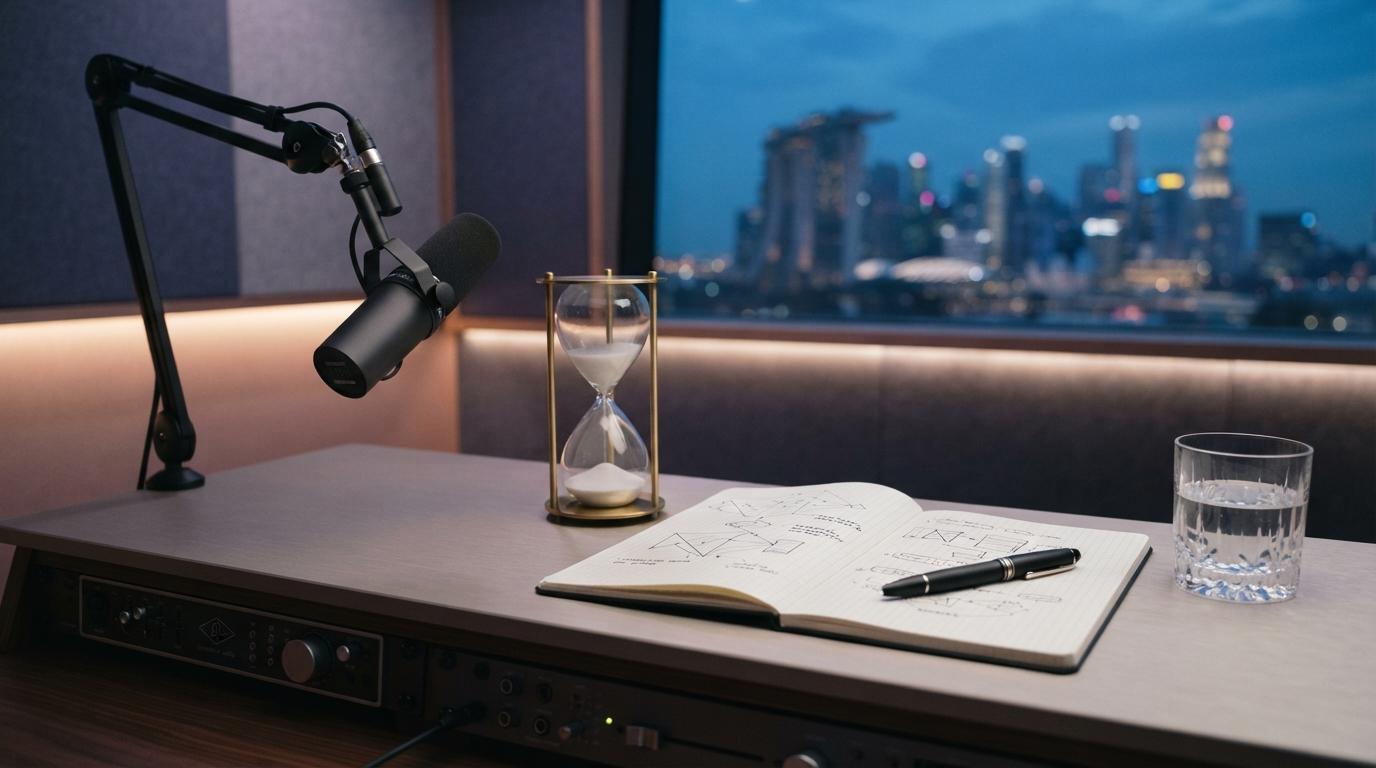
Mastering IELTS Speaking Part 2 Topics Without Rote Memorisation
When preparing for your oral interview, searching for ielts speaking part 2 topics often leads to hundreds of leaked prompt lists and scripted answers. However, attempting to memorise model responses is the quickest way to cap your score at Band 6.0. Recent IELTS examiner directives penalise prefabricated, canned speeches heavily. Examiners are trained to detect unnatural prosody, memorised chunks, and sudden drops in lexical flexibility when shifting from Part 2 into the spontaneous discussion of Part 3.
In the official IELTS Speaking test—administered across Singapore by IDP and the British Council—Part 2 presents you with a cue card containing a prompt and three to four bullet points. You receive exactly 60 seconds of silent preparation time with a pencil and paper, followed by a mandatory 1-to-2-minute monologue. To consistently score Band 8.0 or higher, you do not need to memorise 200 individual cue cards. Instead, you need a modular planning system that classifies every prompt into one of four core archetypes and expands it using an instinctive temporal framework.
The Four Core Cue Card Archetypes
Regardless of whether your test takes place in a British Council centre at Napier Road or an IDP computer laboratory, virtually every Part 2 cue card revolves around four recurring clusters:
1. People and Relationships
Prompts in this category ask you to describe a person who inspired you, an elderly individual you admire, a creative entrepreneur, or a teacher who influenced your life. Rather than inventing biographies on the fly, map your personal experience to one or two versatile figures—such as an academic mentor from polytechnic or a supervisor from an internship—whose background you can articulate with sophisticated descriptive vocabulary.
2. Places and Environments
These cue cards focus on a quiet place you visit, a historic monument, a country you would like to explore, or a polluted city. Singapore candidates often default to obvious local landmarks like Marina Bay Sands or Jewel Changi. While perfectly valid, ensure your answer goes beyond generic promotional descriptions. Use spatial and sensory vocabulary to explain atmosphere, architecture, and emotional resonance.
3. Objects and Technology
Common prompts examine an electronic device you cannot live without, a memorable photograph, an heirloom, or a piece of art. The secret to handling object prompts is to pivot quickly from physical description to emotional and utilitarian significance. Why does this object matter? What problem did it solve?
4. Experiences, Events, and Decisions
This archetype covers challenges, achievements, difficult choices, and celebrations—such as a time you received incorrect advice, a goal you accomplished, or a celebration with family. These prompts require dynamic narrative pacing, contrastive past tenses, and introspective reflections.
The 60-Second Note-Taking Framework: Past-Present-Future
During your 1-minute preparation window, writing complete sentences is impossible. Trying to address the bullet points on the card one by one often leads candidates to finish speaking in just 70 seconds. Use the Past-Present-Future (PPF) note-taking matrix on your scratch paper instead:
Divide your paper into three quick segments with bullet points containing only keywords, collocations, and sensory triggers:
- Past (Context & Genesis): How did you first encounter this person, place, or situation? Note 2–3 specific nouns and past-tense verbs (e.g., commenced polytechnic, disorientating transition, unexpected setback).
- Present (Current Significance & Anchor): What is the reality right now? Detail the focal moment using vivid sensory vocabulary (e.g., vibrant open space, stark contrast, pivotal turning point).
- Future (Reflection & Projections): How does this experience influence your outlook? Include conditional or speculative structures (e.g., subsequent career trajectory, should circumstances permit, profound indelible impact).
By moving through past, present, and hypothetical future scenarios, you automatically generate enough coherent substance to comfortably sustain an uninterrupted 110-to-120-second speech without awkward pauses or repetitive rambling.
Overcoming Regional Speaking Habits in Part 2
Candidates in Singapore frequently display strong receptive vocabulary and grammatical accuracy, but conversational habits can subtly depress the Fluency and Coherence (FC) and Pronunciation (PR) criteria on the IELTS rubric:
- Syllable-Timed Rhythm: Colloquial Singapore English tends toward syllable-timed pacing, where every syllable receives equal duration. Standard International English evaluated in IELTS and TOEFL requires stress-timed cadence. Practice lengthening tonic vowels in content words and weakening structural function words.
- Discourse Markers vs. Conversational Fillers: Avoid informal conversational shortcuts or terminal particles. Replace them with formal, nuanced discourse markers such as "Concurrently," "In retrospect," or "What struck me most profoundly was..."
- Consonant Cluster Reductions: Ensure word-final consonants (e.g., accepted, development, architects) are fully enunciated. Examiners listening for Band 8+ pronunciation award high marks for crisp articulation and intelligible international phonology.
Adapting the Framework to TOEFL, Duolingo, and Regional Tests
This modular storytelling approach is not restricted to IELTS. Candidates tackling alternative English proficiency benchmarks can adapt the same underlying mental framework:
- TOEFL iBT Independent Speaking (Task 1): You receive only 15 seconds of prep and 45 seconds to deliver your position. Condense the PPF model into a direct thesis statement backed by two concrete examples.
- Duolingo English Test (DET) Read Then Speak: Candidates have 20 seconds to read a prompt and speak for 90 seconds into an algorithmically analysed microphone. The structured narrative timeline prevents the abrupt silence that often lowers fluency scores.
If you are exploring other international examinations alongside IELTS, you can review our comparative breakdowns in our language tests prep guides.
Logistics, Scheduling, and Test-Day Strategy
Speaking interview preparation must be paired with strategic timeline management. Speaking test slots across Singapore experience severe booking bottlenecks 6 to 8 weeks ahead of major intake deadlines for overseas universities in the UK, Australia, and the US, as well as local graduate programmes at NUS, NTU, and SMU.
Consider taking Computer-Delivered IELTS rather than the traditional paper format. Computer-delivered testing delivers your official Test Report Form (TRF) in just 1 to 5 calendar days (compared to 13 days for paper-based sittings). Furthermore, taking the computer test unlocks eligibility for the One Skill Retake (OSR). If your speaking subscore falls half a band short of your university conditional offer, you have a 60-day window from your original sitting to re-sit solely the Speaking module rather than repeating all four papers.
Calibrating Your Speech with AI Feedback
To move from Band 7.0 to Band 8.5 in Part 2, unmonitored solo practice into a mirror is insufficient. You need precise objective feedback on your speech delivery rate (aim for 130 to 150 words per minute), your use of uncommon lexical collocations, and the frequency of hesitation markers.
You can discover how Thinka leverages AI-assisted learning to analyse spoken responses, highlighting syntax weaknesses and lexical repetitions in real time. To run mock Part 2 simulations with immediate rubric-aligned diagnostic feedback, begin your preparation with the Thinka test prep platform. By pairing structured note-taking frameworks with deliberate voice drills, you can approach any cue card with total confidence on test day.
Related posts
- Nov 16, 2026
IELTS Essay Topics 2026: Task 2 Macro-Themes, Collocation Clusters & Anti-Template Bank
Master predicted IELTS essay topics for 2026. Explore high-yield Writing Task 2 prompts, Band 8+ thematic collocations, and robust idea frameworks without rote scripts.
- Nov 10, 2026
What Is a Good IELTS Score? University Benchmarks, Subscore Floors & Retake Strategy
Wondering what is a good IELTS score? Discover the 6.0 to 8.0 band matrix, strict university subscore floors, OSR retake rules, and intake deadlines.
- Nov 7, 2026
Is PTE Easier Than IELTS? Algorithm vs Human Marking for Singapore Candidates
Wondering if PTE is easier than IELTS? Compare Pearson's AI marking against IELTS human examiners, evaluate the Band 6.5 switch, and avoid acoustic score traps.
- Nov 4, 2026
IELTS vs Duolingo English Test: Format, Acceptance Realities, and Cognitive-Fit Guide for Singapore Applicants
Compare IELTS vs Duolingo English Test fees, computer-adaptive vs linear formats, turnaround times, and university visa acceptance rules before booking.