Secondary School Selection for Primary Students6 min read
The Ecosystem Auditor: Scouting Schools for Strategic Alliances and 2030 Career ROI
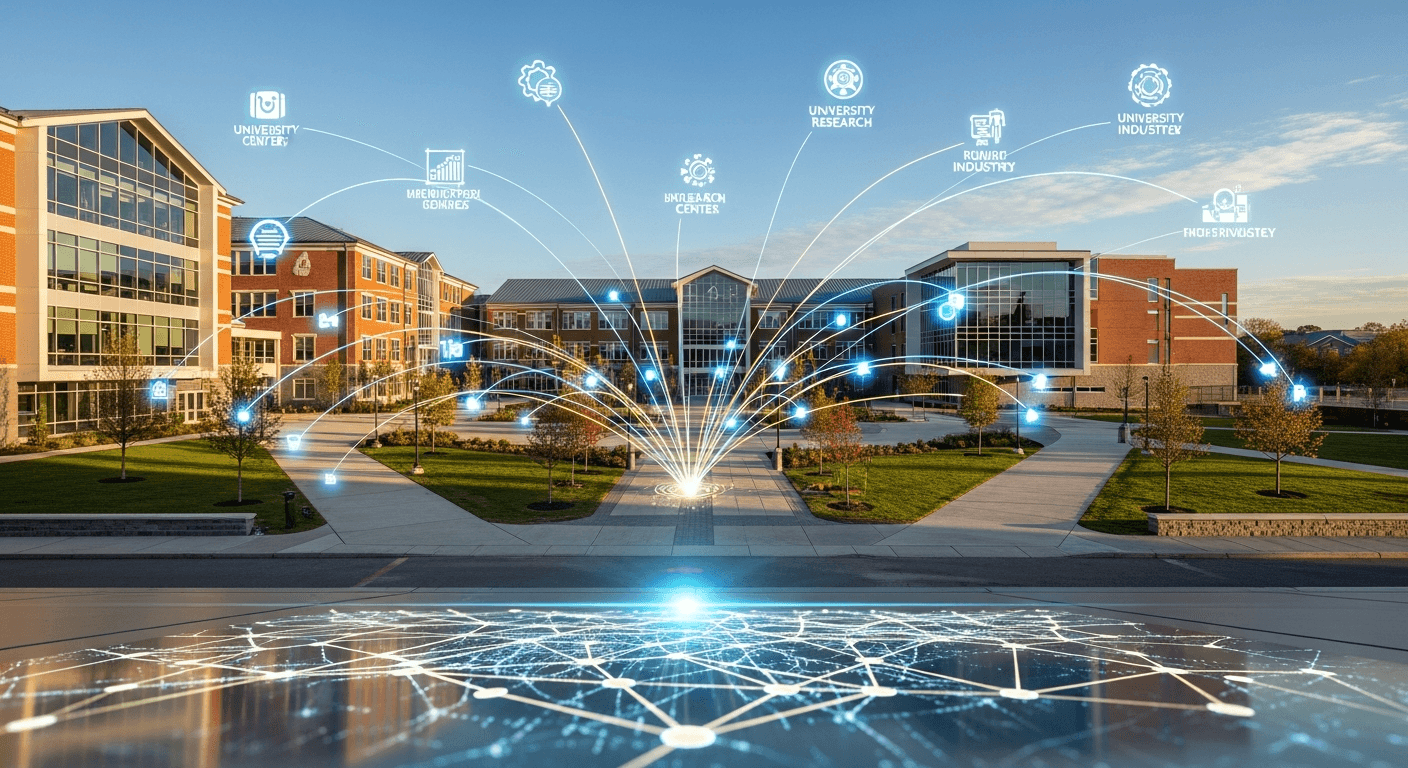
Beyond the GreatSchools Rating: The Shift Toward Institutional Connectivity
For decades, American parents have followed a predictable script when choosing a middle or high school: look at the standardized test scores, check the average SAT results, and see how many students get into the Ivy League. But as we move toward a 2030 economy defined by AI-driven automation and hyper-specialized industries, these internal metrics are becoming less predictive of a child’s ultimate success. The question is no longer just, "What happens inside this classroom?" but rather, "Where does this school lead?"
In the United States, we are seeing a massive shift toward "applied learning" and "industry-linked" education. High-performing schools are no longer just academic hubs; they are becoming nodes in a larger professional and collegiate ecosystem. As a parent of an elementary school student, your role is to become an Ecosystem Auditor. This means looking beyond the campus gates to map the strategic alliances, university bridge programs, and industry pipelines that will give your child a competitive moat in the future job market.
What is a School Ecosystem?
An institutional ecosystem consists of the formal and informal relationships a school maintains with external entities. These might include local biotechnology firms, tech giants like Google or Microsoft, research universities, and global nonprofit networks. While a traditional school focuses on curriculum delivery, an ecosystem-focused school focuses on connectivity.
Think of it as the difference between a library and a networking hub. A library has all the information (the curriculum), but a networking hub provides the introductions (the partnerships) that turn that information into a career. For your child, who is currently navigating 5th or 6th grade, the choice of a middle and high school with a robust ecosystem can mean the difference between a theoretical education and a direct pathway into high-growth sectors.
Auditing the 'University Bridge': More Than Just AP Credits
Most US parents look for Advanced Placement (AP) or International Baccalaureate (IB) courses as a sign of rigor. While these are important, a true Ecosystem Auditor looks for Dual Enrollment and Bridge Programs. These are formal agreements where students take college-level courses that are directly accredited by specific university faculties.
When researching schools, look for partnerships with local state universities or private colleges. Some schools offer programs where students can graduate high school with an Associate’s Degree already in hand. This isn't just about saving money on tuition; it's about early immersion in a collegiate environment. Using AI-powered practice platforms can help students bridge the academic gap between middle school standards and the high-level rigor required by these university-linked courses.
Identifying the 'Industry Pipeline'
In the US, the most forward-thinking schools—ranging from specialized Magnet schools in Texas to private prep schools in New England—are signing MOUs (Memorandums of Understanding) with industry leaders. Here is what you should look for during your audit:
1. Direct Mentorship Programs
Does the school have a formal relationship with a local hospital system for aspiring doctors, or a tech incubator for future engineers? These are not just "field trips." They are structured programs where students work on real-world problems alongside professionals.
2. Co-Developed Curricula
Some of the best STEM schools in the country now have curricula co-developed by organizations like NASA or local aerospace companies. This ensures that the skills being taught—such as Python programming or data analysis—are the exact skills the market currently demands.
3. Super-Curricular Ecosystems
Beyond extracurriculars like sports or band, look for "super-curriculars." These are academic pursuits that go beyond the standard syllabus, often supported by external partners. Examples include competitive robotics teams sponsored by engineering firms or debate clubs coached by university law professors. These activities build a "narrative of excellence" that is essential for future college applications.
How to Use AI to Audit a School’s Strategic Plan
You don't have to spend hours digging through PDFs to find this information. You can use AI to do the heavy lifting. Most school districts and private institutions publish a "Strategic Plan" or an "Annual Report." These documents are often 50+ pages of educational jargon, but they contain the gold you need.
Try feeding these documents into an AI tool and asking: "List all mentions of external industry partnerships, university collaborations, and workforce development initiatives in this report." This will quickly reveal whether a school is focused on internal maintenance or external expansion. If you find a school that lists specific partnerships with organizations like the NIH (National Institutes of Health) or localized tech hubs, you’ve found a school that is actively building a moat for its students.
The 'Competitive Moat': Why Connectivity Matters for 2030
Why should the parent of a 4th or 5th grader care about this now? Because the transition from elementary to middle school is the moment when the academic track begins to lock in. If a child enters a middle school that is disconnected from the local high school’s specialized industry tracks, they may find themselves shut out of high-leverage opportunities later on.
A school's ecosystem provides what social scientists call "social capital." It gives your child access to a network of professionals and academics that they wouldn't have otherwise. In an era where AI can generate content and solve basic equations, human-centric networking and applied experience are the only things that cannot be easily replicated. Finding a school that acts as a gateway to these networks is the ultimate ROI for your educational investment.
Questions for Your Next School Tour
When you attend an open house or a school tour, skip the questions about the cafeteria or the gym. Instead, ask the following:
- "Can you list your top three formal partnerships with local universities or corporations?"
- "How do these partners influence the curriculum in the upper grades?"
- "What percentage of students participate in external internships or dual-enrollment programs?"
- "How does the school support students in building a portfolio of work that is recognized by these industry partners?"
If the administration can't answer these questions clearly, it may be a sign that the school is an academic island rather than a connected ecosystem. As your child prepares for these higher expectations, you can find free study materials and resources to help them develop the independent study habits necessary to thrive in these more complex environments.
The Role of AI in Preparing for High-Ecosystem Schools
Schools with heavy industry and university links often have a much steeper learning curve. They expect students to be self-directed and capable of high-level synthesis. This is where AI becomes a critical ally. Platforms like Thinka allow students to practice at their own pace, ensuring they have the foundational knowledge required to take advantage of a school's external opportunities.
By using AI-powered tools to improve grades, students can free up the cognitive bandwidth needed to engage with a school's ecosystem—whether that's a research project with a university partner or a coding internship at a local startup.
Conclusion: Mapping the Future
The transition from elementary to secondary school is about more than just finding a safe place for your child to learn. It is about selecting a launchpad. By shifting your focus from internal metrics to the institutional ecosystem, you are ensuring that your child’s education is not just a series of tests, but a series of doors opening into the 2030 economy.
Become the Ecosystem Auditor for your child. Look for the partnerships, verify the pipelines, and use the tools available to ensure they are ready to walk through those doors when the time comes. If you are a teacher looking to help your students prepare for this shift, you can explore how AI can help generate practice papers that mirror the rigor of these high-level secondary environments.
Related posts
- Oct 20, 2026
Middle and Secondary School Interview Questions: The 5 Archetypes and Prep Blueprint
Master secondary school interview questions for middle school admissions. Learn what panels look for, the 3-step PER response model, and practical mock prep tips.
- Oct 10, 2026
Do Middle Schools Use Elementary Test Scores for Tracking? 5th Grade Placement Decoded
Discover whether middle schools use 5th grade state test scores and fall diagnostics for honors tracking, how it impacts AP and SAT pathways, and how to advocate.
- Sep 30, 2026
Secondary School Cut Off Points: PSLE AL Scoring Matrix, Posting Bands, and Strategic Ranking Guide
Master secondary school cut off points, PSLE AL score bands, Full SBB posting groups, tie-breaker rules, and a 3-tier choice ranking strategy for your child.
- Sep 20, 2026
11 Plus Pass Marks by Region: Standardized Age Scores, Regional Cut-Offs, and Placement Benchmarks
Demystify 11 plus pass marks by region. Learn how Standardized Age Scores (SAS) work, compare regional benchmarks, and navigate cut-offs before application deadlines.