
Building a Digital Second Brain: Organizing Your HKDSE Revision for Maximum Efficiency
Picture this: It is three months before your first HKDSE exam. Your desk is an avalanche of crumpled past papers, sticky notes, thick textbooks, and half-finished mock exams. You know you wrote down the perfect marking scheme phrase for a tricky Biology question on genetics, but which notebook is it in? Was it on a loose piece of paper? Did you take a photo of it on your phone?
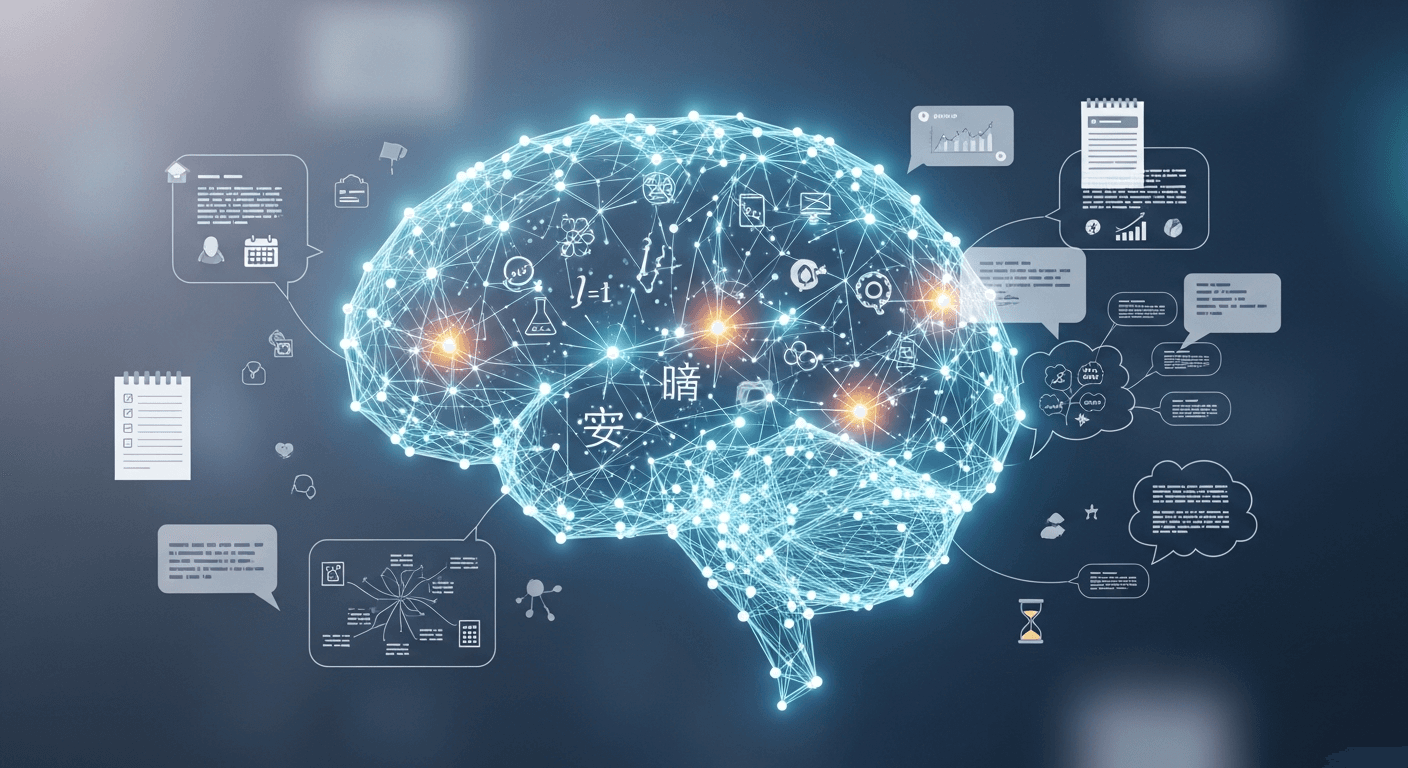
If this sounds familiar, you are not alone. The sheer volume of information HKDSE students need to memorize and apply across four core subjects and multiple electives is staggering. The modern exam preparation landscape demands more than just highlighting textbooks; it requires a systematic approach to knowledge management. This is where the concept of a Digital Second Brain comes in—a game-changing strategy that pairs perfectly with modern educational tech to maximize your study efficiency.
What is a Digital Second Brain?
Coined by productivity expert Tiago Forte, a "Second Brain" is an external, centralized, digital repository for the things you learn. Your biological brain is brilliant at connecting ideas, analyzing sources for your Citizenship and Social Development (CSD) essay, and solving complex mathematics problems. However, your biological brain is terrible at remembering the exact wording of a 2019 Chemistry marking scheme or the specific dates of historical events.
By offloading facts, formulas, and notes into a digital system (like Notion, Obsidian, or even a well-organized Google Drive), you free up your mental bandwidth. You transition from a stressed student trying to remember everything to a strategic learner focusing on understanding and application. When combined with an innovative study platform, your Second Brain becomes an unstoppable engine for DSE success.
The Four Steps to Building Your DSE Second Brain
To create a system that actually helps you score higher, we can adapt the famous C.O.D.E. methodology specifically for HKDSE students.
Step 1: Capture (Gathering Your Knowledge)
The first step is getting information out of your head and your physical space, and into your digital workspace. You should only capture what truly resonates or what you consistently get wrong.
Pro Tip for Capturing:
- Take photos of complex blackboard diagrams and drop them into your digital notes.
- Save PDF versions of past paper marking schemes.
- Record your mistakes. If you mess up the quadratic formula, capture the correct version: \( x = \frac{-b \pm \sqrt{b^2 - 4ac}}{2a} \) right into your "Math Formulas" digital page.
Step 2: Organize (Structuring for Retrieval)
A messy digital folder is just as useless as a messy physical desk. Organize your notes by actionability, not just by subject. Instead of a generic folder named "Physics," break it down into the DSE syllabus structure.
Effective DSE Structure Example:
- Area 1: Heat and Gases (Active notes and formulas)
- Area 2: Force and Motion (Diagrams and definitions)
- Resources: Past Papers 2015-2023 (Blank copies and marking schemes)
- Archive: Form 4 Topics (Things you have already mastered and summarized)
Step 3: Distill (Finding the Essence)
Copying the textbook word-for-word is a waste of time. Distillation is about boiling down three pages of Economics text into the core concepts you need to write an essay on market intervention. Use progressive summarization: bold the main points, highlight the keywords, and write a one-sentence summary at the top of your note.
For example, in Chemistry, instead of copying paragraphs about enthalpy change, distill it to the core principle and formula: "Enthalpy change is the heat transferred during a chemical reaction at constant pressure," followed by \( \Delta H = \Sigma H_{products} - \Sigma H_{reactants} \).
Step 4: Express (Putting Knowledge to the Test)
This is the most crucial step for HKDSE students. A Second Brain is useless if you do not use the information to produce results. "Expressing" means doing past papers, writing timed essays, and testing your recall. This is where your organized notes meet active practice.
While your Second Brain handles the organization of your notes, you need a dynamic environment to test those concepts. This is exactly where an AI-driven platform steps in to elevate your exam preparation.
Supercharging Your Revision with AI-Powered Learning
Once you have built your Second Brain, how do you know if the information is actually sticking? Recent educational trends show that the most successful students do not just passively read their digital notes; they engage in active recall and adaptive testing.
The beauty of AI-powered learning is that it acts as the ultimate diagnostic tool for your Second Brain. While your Notion workspace holds your summaries, a smart platform analyzes your performance, identifies your weak spots, and generates targeted questions to test those exact areas.
Imagine reading your distilled notes on BAFS accounting ratios, and then seamlessly moving to a platform that generates dynamic questions testing those specific ratios. If you get them wrong, the AI adapts, providing explanations and step-by-step guidance. This creates a powerful loop of personalized learning: you study your Second Brain, you test on an adaptive platform, you identify gaps, and you update your notes. It is a continuous cycle of improvement.
By leveraging these modern educational tools, you can drastically reduce the time you spend figuring out what to study. The AI tells you where your weaknesses are, and your Second Brain provides the quick reference material to fix them. If you are eager to see how adaptive technology can transform your output, you can Start Practicing in AI-Powered Practice Platform and experience the difference yourself.
Quick Facts: Why Digital Organization Matters
1. Reduces Cognitive Overload: Educational psychology studies indicate that students who offload factual information into organized external systems experience significantly less exam anxiety. Your working memory is limited; save it for critical thinking in the exam hall.
2. Spaced Repetition Synergy: Digital notes can be easily converted into flashcards. Combining a structured Second Brain with spaced repetition algorithms ensures that you review topics right before you are about to forget them.
3. Future-Proofing Your Skills: University life is entirely digital. Learning how to manage large databases of knowledge now will put you leaps and bounds ahead of your peers when you enter your first year of university.
Overcoming the "I Don't Have Time" Excuse
A common concern among Form 6 students is: "I am already drowning in revision. I do not have time to set up a fancy digital system!"
This is a valid fear, but think of it as an investment. Spending two hours this Sunday organizing your scattered PDFs, creating subject folders, and typing up your most-forgotten formulas will save you twenty hours of frantic searching during your study leave in March. You do not need to retroactively digitize your entire Form 4 curriculum. Start from today. Capture the notes from today's tutorial. Organize the mistakes from today's mock exam. Build your Second Brain gradually.
Bridging the Gap Between Input and Output
Ultimately, succeeding in the HKDSE is about mastering two distinct phases of studying: Input (absorbing information) and Output (answering questions correctly). Your Digital Second Brain is the ultimate tool for organizing your Input. It ensures that every marking scheme keyword, every complex historical timeline, and every crucial physics formula is just one search bar away.
However, Output requires practice. It requires a dynamic environment that challenges you, adapts to your current level, and pushes you toward the elusive Level 5**. This is the core philosophy behind modern educational technology. We believe that when students pair brilliant organizational habits with cutting-edge practice tools, academic excellence naturally follows. To learn more about our vision for the future of education and how we support students on their journey, feel free to visit the thinka Home Page.
Conclusion
Organizing your HKDSE revision does not have to be a chaotic, paper-filled nightmare. By building a Digital Second Brain, you take control of your study materials, reduce your mental clutter, and create a streamlined repository of knowledge. Remember to Capture strategically, Organize logically, Distill relentlessly, and Express consistently.
When you combine the structured knowledge of a Second Brain with the adaptive power of a smart study platform, you are no longer just studying hard—you are studying smart. You are utilizing the very best of personalized learning to target your weaknesses and reinforce your strengths. Start organizing your digital workspace today, embrace the power of AI-assisted practice, and walk into that exam hall with absolute confidence. You've got this!