Secondary School Selection for Primary Students5 min read
The Digital Threshold: Evaluating Middle Schools Through an AI Ethics and Tech-Wellness Lens
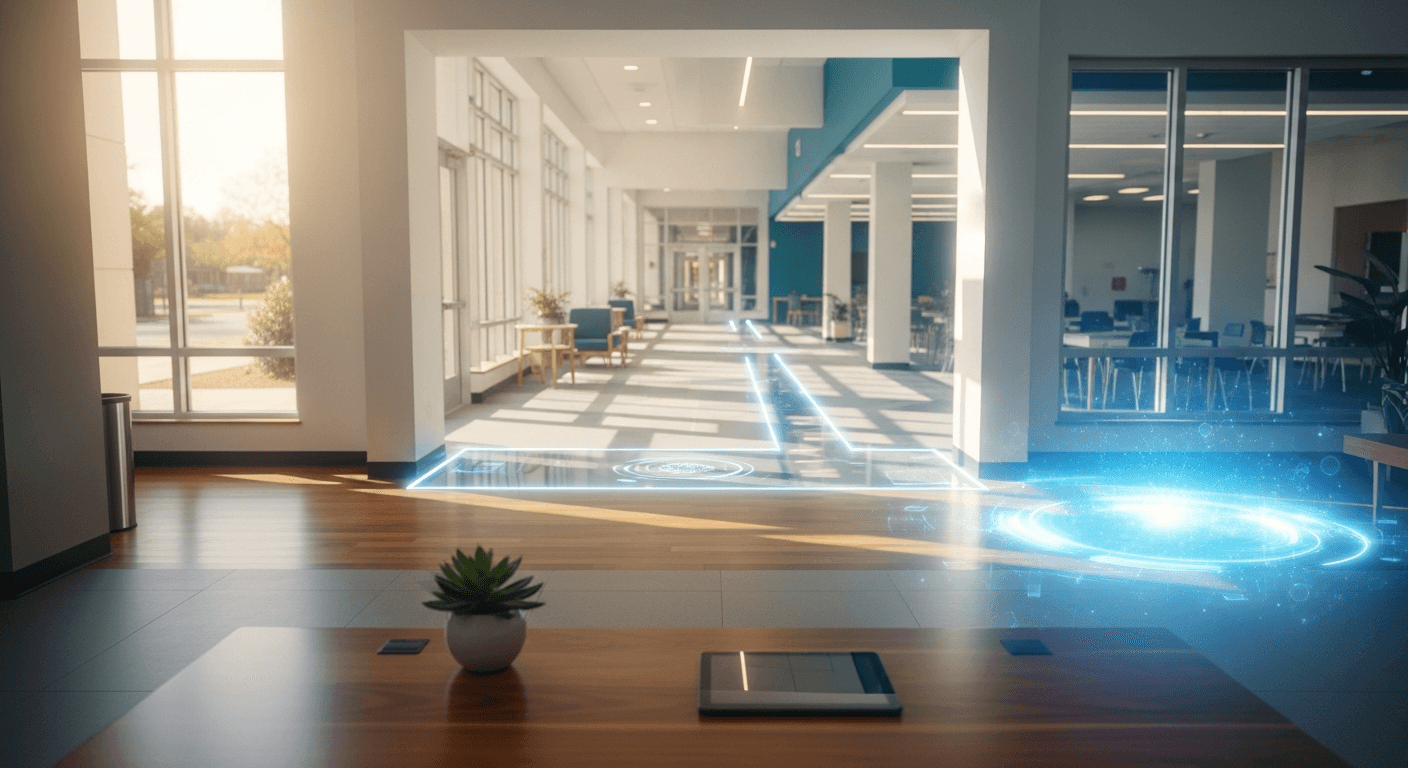
The Middle School Pivot: Moving Beyond the 1:1 Laptop Program
For most American families, the transition from elementary to middle school marks a massive shift in a child’s digital life. In the elementary grades, tech use is often tightly choreographed—a set of shared iPads, a specific hour in the computer lab, or highly filtered educational apps. But as your child approaches sixth or seventh grade, the 'Digital Handshake' between the school and the student changes. Many school districts move to 1:1 device initiatives, where students are issued their own laptops or tablets to carry between classes and take home. While this increases access, it also shifts the burden of regulation from the teacher to the student.
As you tour prospective secondary schools, whether they are local public magnets, private academies, or charter schools, it is no longer enough to ask, 'Do you have a 1:1 program?' Instead, parents must investigate the architecture of the school’s digital wellness. You are looking for a school that doesn't just hand over a screen, but one that explicitly teaches a student how to manage that screen’s influence on their focus, ethics, and mental health.
Auditing the AI Ethics Blueprint
We are currently living through the most significant shift in educational technology since the introduction of the internet: the rise of Generative AI. For a middle schooler, the temptation to use AI as a shortcut is high. However, the goal of secondary education is to build the cognitive 'muscle' required for high-stakes milestones like AP (Advanced Placement) exams and the Digital SAT.
When evaluating a school, ask the administration about their AI ethics policy. A high-quality school will have a framework that goes beyond 'don't use it to cheat.' Look for schools that are integrating AI literacy into the curriculum. This means teaching students how to prompt effectively, how to fact-check AI-generated claims, and how to use these tools as a scaffolding resource rather than a replacement for critical thought. A school that ignores AI is leaving your child unprepared; a school that embraces it without a moral compass is risking their academic integrity.
The Screen-Time Autonomy Paradox
In many U.S. middle schools, the policy on personal devices (smartphones and smartwatches) is a major point of contention. Some schools have implemented total 'away for the day' bans, while others allow 'responsible use' during lunch or passing periods. There is no one-size-fits-all answer, but you should look for a school whose policy aligns with your family’s values regarding Digital Wellness.
Consider the 'Screen-Time Autonomy' the school grants. Does the school provide data-driven guidance on how to manage digital fatigue? Middle school is where the foundation for high school productivity is laid. If a school’s digital environment is chaotic, it can lead to fragmented attention spans. Research suggests that the constant 'ping' of notifications can significantly degrade the quality of deep work. Effective schools are now implementing 'Focus Blocks' or 'Tech-Free Zones' to help students reset their nervous systems. This is especially important as students begin preparing for the rigors of high school, where personalized study support becomes essential for managing a heavy course load.
Evaluating 'Tech-Balanced' Environments
A school’s commitment to digital wellness is often visible in its physical layout and its extracurricular offerings. During your visit, look for evidence of the following:
1. Digital Citizenship Curricula: Does the school use a recognized framework (like Common Sense Media) to teach students about their digital footprint, cyberbullying, and the permanence of online actions?
2. Analog Interventions: Even in a high-tech school, are there opportunities for students to engage in tactile, analog learning? Successful middle schools often maintain robust libraries, maker spaces with physical tools, and outdoor learning environments to balance the time spent on screens.
3. Homework Expectations: Ask how much of the nightly homework requires a screen. If a student is on a laptop for seven hours at school and then four hours at home, the risk of burnout is high. Inquire if teachers coordinate to ensure students aren't facing a 'digital pile-up' of assignments across multiple platforms.
The Role of AI-Powered Practice in a Healthy Ecosystem
As parents, we often worry that any interaction with AI will diminish our child’s effort. However, when used correctly, AI can actually support digital wellness by reducing the frustration and 'spinning wheels' that often lead to tech-based distractions. For example, using an AI-powered practice platform can provide immediate, targeted feedback. This prevents the student from getting stuck for hours on a math problem, which is often when they wander off into YouTube or social media. By providing a clear path forward, these tools help students stay in the 'flow state' of learning.
Furthermore, these platforms can help teachers generate practice materials that are calibrated to a student’s specific needs, ensuring that technology is being used to personalize the human experience of learning, rather than replacing it.
Practical Questions for Your Next School Tour
To truly understand a school’s digital culture, skip the glossy brochures and ask these specific questions during your tour or open house:
- How does the school transition students from the 'highly supervised' tech of 5th grade to the 'independent' tech of 6th grade?
- Can you show me an example of how a teacher has integrated AI ethics into a recent social studies or science project?
- What is the school’s policy on 'distraction management' during independent study periods?
- How does the school handle the mental health implications of social media use, even if that use happens off-campus?
- How are students taught to evaluate the bias and credibility of information found through AI or search engines?
Preparing for the Future: AP and Beyond
Ultimately, the middle school selection process is about more than just the next three years; it is about building the habits required for college readiness. In the U.S. education system, the path to elite universities often runs through Advanced Placement (AP) courses. These courses require a level of synthesis and critical evaluation that cannot be faked with an AI chatbot. By choosing a school that prioritizes Digital Autonomy and Ethical AI usage now, you are ensuring your child develops the internal discipline to succeed when the stakes are higher.
The goal is to move from a parent-managed digital life to a student-managed digital life. The right middle school acts as the scaffold for this growth, ensuring that when your child eventually sits down for the SAT or their first college seminar, they are the master of their tools, not the other way around.
Related posts
- Sep 30, 2026
Secondary School Cut Off Points: PSLE AL Scoring Matrix, Posting Bands, and Strategic Ranking Guide
Master secondary school cut off points, PSLE AL score bands, Full SBB posting groups, tie-breaker rules, and a 3-tier choice ranking strategy for your child.
- Sep 20, 2026
11 Plus Pass Marks by Region: Standardized Age Scores, Regional Cut-Offs, and Placement Benchmarks
Demystify 11 plus pass marks by region. Learn how Standardized Age Scores (SAS) work, compare regional benchmarks, and navigate cut-offs before application deadlines.
- Sep 9, 2026
Middle School Choice Ranking Strategy: How to Hedge Lottery Risks and Master Public School Matching Systems
Master your middle school choice ranking strategy. Learn how deferred acceptance algorithms work, hedge lottery cut-offs, and secure top magnet placements.
- Aug 30, 2026
Middle School Admissions Decoded: How to Build a Balanced School Portfolio Using ISEE, SSAT, and Selective Tiers
Master middle school admissions rankings and score thresholds. Learn how to audit selective tiers, evaluate ISEE/SSAT percentiles, and build a balanced school portfolio.